


LONDON: The UN’s World Food Programme on Thursday repeated its warning over the energy and food shock arising from the Iran war, raising the alarm that 45 million people worldwide could be pushed into hunger.
It came during a briefing by Carl Skau, acting executive director of WFP, which has been blighted by funding gaps amid a series of worsening country-specific crises.
However, the closure of the Strait of Hormuz serves as the lynchpin of the global threat to food and energy security, he said, warning of disastrous consequences if oil remains around or above $100 per barrel until July.
“The correlation between the price of energy and food is so tight in many places, and also in the poorest countries people are already spending all their money on food,” he said at the briefing at UN headquarters in New York City.
Skau has seen the effects firsthand through visits to Afghanistan, Lebanon and Sudan, while WFP has warned of dire food-security conditions in Somalia and Sri Lanka.
“You’ve heard reports, not least from the FAO (Food and Agriculture Organization), speaking about the impact of lack of fertilizer,” he said.
“There’s now the planting season in most of Eastern Africa. The rainy season is on its way, and we’re really worried that productivity will go down.
“I’ve just come back from Afghanistan … The crises in Afghanistan are manifold. Only last year, heavy earthquake, two severe floods, and then of course, really the shockwaves from the war on Iran and now the conflict also with Pakistan.”
On the frontline of services, WFP has to contend with limited funding, irregular migration and supply shortages, Skau said.
Intervention from governments is also compounding woes for the agency, he added, highlighting the situation in Gaza, where “life remains brutal.”
Though WFP had been able to “respond at scale” since the start of the ceasefire in the Palestinian enclave, “food isn’t everything” and “other sectors are really struggling,” he said, adding that this is “partly due to constraints or under the idea of dual use (restrictions).”
In overseeing aid deliveries to Gaza, Israel has placed strict restrictions on so-called dual use technologies that could conceivably be used both for civilian and military purposes.
“So in the shelter sector, in water and sanitation, in healthcare, but also just trying to bring girls and boys back to school, there isn’t enough progress,” Skau said.
“That was also part of phase one (of the ceasefire agreement) in terms of humanitarian support, and we’re by far not there. We stand ready to do more in terms of supporting others on logistics, but they need to also have access to bring in their commodities to scale up on those fronts.”
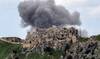
In Lebanon, WFP’s biggest challenge is confronting the scale of needs in the south of the country, he said, adding: “People are still remaining behind (in the warzone). And as soon as we have assurances that we can travel with convoys safely, we do so.
“But it’s not regular and it’s not enough. And, of course, we’re running out of money in terms of providing cash to the hundreds of thousands displaced.
“We’re also now looking at cheaper models to provide food for those who are stuck in temporary shelters; the hot meals that we kicked off at the start are too expensive over time.”
Despite mass displacement in southern Lebanon amid the Hezbollah-Israel war, WFP is keen to return some “normalcy and dignity in life” to the displaced through regular services, Skau said.