


LONDON: As renewed conflict in Lebanon forces a fresh wave of Syrian refugees to return to their home country, joining the roughly 3.5 million people who have gone back to their towns and villages since December 2024, many are finding a health system that is still a long way from recovery.
Many are returning with chronic illnesses, untreated trauma and life-changing injuries, only to encounter hospitals and clinics still crippled by years of war. Now, a new Relief International study has found that the arrival of returnees is far outpacing medical capacity.
Calling for “urgent, coordinated action” to rebuild Syria’s health system after 14 years of civil war, the international nonprofit said in a May 11 statement that “amid the influx of families returning home, patients are unable to access the care they need.”

As Syrian hospitals strain under mounting pressure, many patients with chronic illnesses lack access to proper testing. (AFP)
Since Bashar Assad fled the country in late 2024 after a rebel offensive led by now-interim President Ahmad Al-Sharaa, more than 1.2 million Syrian refugees and 1.9 million internally displaced people have returned as of December last year, according to UN figures.
Then, as the Israel-Hezbollah conflict sharply escalated in early March, a further 120,000 Syrians crossed back into Syria from Lebanon, where they had resided during the civil war, according to state agency SANA.
Dr. Zaher Sahloul, head of the US-based medical charity MedGlobal, said the number of returnees is “huge” for a country emerging from war, with an already weak economy, 80 percent of people living below the poverty line, and significant infrastructure destruction.

Zaher Sahloul, head of the MedGlobal organization. speaks at an informal camp for displaced people, where Syrians who fled air strikes in their hometown live with their families, in northern Syria's Idlib province on January 7, 2020. (AFP File photo)
“This has strained not only the healthcare system, but the public system in general,” Sahloul told Arab News.
“I don’t think the government or local authorities have the capacity to provide livelihood support, shelter, education or healthcare to returnees. People are largely left to rely on their communities, families and their own savings.”
That pressure is especially visible in devastated areas, such as in Homs. Sahloul, who is from the city, said that even if a family returns to a neighborhood like Al-Khalidiya and manages to repair what is left of their home, basic care can still be out of reach.
“They’re still going to struggle to find primary health centers offering prenatal care, vaccinations, or medications for chronic diseases,” he said.
“That pushes people into the hospital system, which is also in crisis due to increased demand, decreased capacity, and diminished medical supplies.”
Indeed, according to the World Health Organization, just 57 percent of hospitals and 37 percent of primary healthcare centers were fully operational in 2025.
Years of conflict also drove an exodus of medical workers. While there is no confirmed total, reports point to tens of thousands leaving the country, including more than 15,000 physicians between 2011 and 2016, according to a WHO estimate.

A view of damage at the Ayunlbeyda Hospital in Idlib, northern Syria, which became inoperable following a flood disaster on February 8, 2026. (Anadolu via Getty Images)
As a result, many returnees with complex health needs are coming back to find a system that can barely provide routine care.
“People are living in and returning to areas where hospitals are destroyed, health workers have fled, medicines are unaffordable and equipment is out of date,” Petros Passas, country director for Relief International in Syria, told officials convening in Brussels on May 11.
“Without large-scale and sustained commitment from the international community, Syrians face a very real public health crisis.”
Sahloul said the medical profile of returnees depends in part on where they are coming from, but some patterns are clear.
“Most patients present with chronic diseases,” he said. “Hypertension, diabetes, dyslipidemia, cardiac disease, chronic obstructive pulmonary disease and asthma are all very common in Syria.”
He added that many patients with noncommunicable diseases also suffer from “underlying mental health conditions,” including “depression, anxiety, and post-traumatic stress disorder linked to displacement and violence.”
Women and children are among the most vulnerable.

An injured child awaits medical care at a hospital, following an explosion in Maarrat Misrin in the northern part of Syria's Idlib governorate on July 24, 2025. The explosion of unknown origin killed at least four people and injured more than 100 others. (AFP)
“There are large numbers of children and women of childbearing age requiring prenatal care,” Sahloul said. In Homs, he added, many primary health centers are no longer functioning, and those still open often provide only limited services, such as vaccinations.
The consequences are severe, he warned.
“Pregnant women lack adequate prenatal care; patients with chronic conditions can’t access medications for diabetes or hypertension; people traumatized by violence and displacement have no access to mental health services, which were already underfunded before the war; and surgeries are being postponed.
“Patients with cardiac conditions may die waiting.”
Dr. Randa Loutfi, programs director at the Syrian American Medical Society, or SAMS, said returnees’ main health needs include mental health and psychosocial support, steady medication supplies for chronic conditions, maternal and

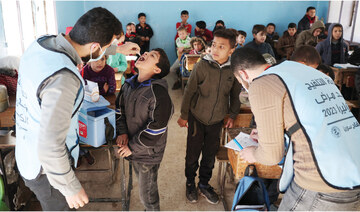
In Syria's lingeri crises, women and children have been among the most vulnerable, according to health officials. (Reuters photo)
child care, rehabilitation for disabilities caused by war-related injuries and specialized treatment such as cancer care and dialysis.
Many, she told Arab News, are also carrying the compounded effects of forced displacement, poverty, poor living conditions, exposure to violence, the loss of loved ones and, for some, the February 2023 earthquake.
Relief International’s May report found that 86 percent of women surveyed said they were experiencing anxiety and psychological distress driven by exposure to conflict and prolonged displacement.
The organization warned that conditions often worsen after return because of the near absence of maternal and reproductive care, a lack of services for survivors of gender-based violence and a nationwide gap in mental health support.
The war has also left behind less visible damage: undetected illnesses, untreated disease and acute malnutrition, according to the same survey.
Loutfi said that for patients with diabetes and high blood pressure, even limited access to medication rarely comes with screening, preventive care or proper testing for complications.

Many of Syria's hospital had been destroyed or damaged not only during its yearslong civil war but also in clashes that erupted between rival groups even after ruler Bashar Assad was kicked out in late 2024. (Reuters photo)
In specialized care, she said, years of disruption have led to delayed diagnoses and poor disease management. “Returnees also face interruption in treatment cycles” and often lack essential medical records, she said, “resulting in life-threatening deterioration.”
Beyond illness, many returnees are living with permanent injuries or disabilities. Roughly 28 percent of Syrians now live with some form of disability, nearly double the global average, according to UN figures and Relief International.
And as more people return to long-abandoned farmland, Relief International warned, that figure could continue to rise because of unexploded ordnance and land mines in former conflict areas.
Even as needs mount, funding is falling short and recovery remains out of reach.
“Unfortunately, the decline in donor funding after the fall of the regime forced many clinics and hospitals to close in the northwest and the northeast,” Loutfi said.
Sahloul said the response must become far more coordinated. “The profile of returnees needs more attention from both the government and the international community,” he said.
“On the funding side, the international community is lagging behind in contributions to the UN refugee agency, UNHCR,” he said.

Medical personnel work at a hospital, following deadly clashes between Druze fighters, Sunni Bedouin tribes and government forces, in Syria's predominantly Druze city of Sweida, Syria July 25, 2025. (Reuters)
“And the government, frankly, should have a dedicated ministry for returnees. There isn’t enough focused discussion about what can be provided to them.
“Addressing this properly requires integrated services, not just building a clinic here and a housing program there, but providing livelihood support, documentation for returnees and dealing with landmines.
“There have been many incidents of people being killed or injured by explosive ordnance left in areas people are returning to.”
Aid groups say they are trying to bridge the gap as best they can.
Loutfi said SAMS has focused on continuing support for its facilities, especially in areas in the northeast and northwest where population movement has sharply increased demand.
The organization has expanded primary care by rehabilitating clinics, supporting provider incentives, distributing essential medicines and training staff on treatment protocols.
It is also helping rehabilitate and operate damaged hospitals in return areas such as eastern Aleppo, Kafr Batna and Zabadani in rural Damascus, Loutfi said.

Sunni Bedouin tribes and government forces, in Syria's predominantly Druze city of Sweida, Syria July 25, 2025. (Reuters)
MedGlobal has centered its response on four areas: primary care, urban hospitals, maternal health and mental health support.
“We are expanding our primary health centers,” said Sahloul. “We currently have seven, with 22 more in development. By the end of the year, we aim to have 30 centers operating across Syria.”
The primary care package, he said, “includes medications for non-communicable diseases, prenatal care, vaccinations, and mental health support. This will provide more comprehensive care and also reduce the strain on hospitals.”
The group is also supporting hospitals by providing updated medical equipment, training and medical missions.
“In each city, we’ve selected one major hospital, either a university hospital or one under the Ministry of Health, and are equipping it and training its staff,” Sahloul said.
MedGlobal is also integrating maternal care into its primary health centers and training doctors to provide basic mental health services for common conditions such as depression and anxiety.
For Relief International, the stakes extend beyond healthcare alone. “At this moment of hope and transition for Syria, the support of all governments, donors and actors with power remains crucial,” country director Passas said on May 11.
Until that support materializes at scale, many Syrians returning home will keep confronting a bitter paradox: After surviving war and displacement, they are coming back to a country where the need to heal is everywhere, and the capacity to do so remains dangerously limited.