


NEW YORK CITY: France’s ambassador to the UN, Jerome Bonnafont, warned the UN Security Council that Israel’s expanding military operations in Lebanon risked becoming a “major strategic mistake,” as he urged all parties to recommit to the fragile ceasefire agreement and pursue a diplomatic resolution to the conflict.
Speaking during an emergency Security Council meeting on Monday to discuss Lebanon, convened at the request of France, Bonnafont said the escalating violence threatened regional stability and undermined efforts to secure a lasting peace between Lebanon and Israel.
He reiterated that the blame for the conflict lies squarely with Hezbollah: “It is Hezbollah, supported by Iran, that bears responsibility for the outbreak of hostilities, having dragged Lebanon and the Lebanese people into a war that is not theirs.”
He condemned Hezbollah for its continuing attacks on Israeli territory, and affirmed Israel’s right to defend itself. However, he argued that the Israeli military response had exceeded the legitimate limits of self-defense.
“Nothing can justify the continuation and scale of its military operations in Lebanon, the thousands of civilian deaths and injuries, and the forced displacement of populations,” Bonnafont told council members.
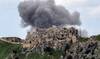
The conflict escalated significantly on Sunday when Israeli Prime Minister Benjamin Netanyahu ordered the military to “deepen and expand” operations in southern Lebanon. Israeli forces subsequently advanced north of the Litani River and announced the capture of Beaufort Castle, where images of an Israeli flag at the site evoked memories of the Israeli occupation of southern Lebanon between 1982 and 2000.
Israel airstrikes also intensified across southern Lebanon, the Beqaa Valley and areas near Beirut, and sweeping evacuation orders were issued covering much of the south.
Meanwhile, Hezbollah launched rocket, missile and drone attacks against Israel, including strikes deeper into Israeli territory, and reiterated that it would not give up its weapons despite pressure from the Lebanese government to do so.
More than 3,400 people have been killed and more than 10,000 wounded since hostilities between Israel and Hezbollah began to surge on March 2. Four Israeli civilians and 26 soldiers have also been killed, as well as six peacekeepers from the UN Interim Force in Lebanon, highlighting the mounting human cost of the conflict.
Bonnafont said Israel’s operations in Lebanon violated commitments made under the ceasefire agreement that came into force on April 17 under US auspices, as well as resolutions adopted by the Security Council.
He specifically highlighted the reported raising of the Israeli flag over the historic Beaufort fortress in southern Lebanon, describing the action as symbolic of a return to a period of occupation that many believed had ended with Israel’s withdrawal from southern Lebanon 26 years ago.
“Far from bringing security to Israel and its citizens, a new occupation risks only fueling instability,” Bonnafont warned, arguing that civilian casualties and the destruction of civilian infrastructure strengthen Hezbollah while weakening the Lebanese government and state institutions.
France called on Israel to support the efforts of Lebanese authorities to reassert state control and sovereignty, saying that Israel’s long-term security depended on peace and regional stability rather than military occupation.
Bonnafont emphasized that the April 17 ceasefire agreement remains the only viable framework for achieving a durable peace. France, he said, fully supports the direct talks between Lebanon and Israel that are being conducted under US sponsorship.
He described upcoming negotiations scheduled for June 2 and 3 as presenting a “decisive opportunity,” and urged all stakeholders, including the US, to work to ensure their success.
Paris hopes the talks will produce a comprehensive political settlement that includes the disarmament of Hezbollah, the restoration of full Lebanese sovereignty, the withdrawal of Israeli forces from Lebanese territory, and guarantees of Lebanon’s territorial integrity, Bonnafont added.
He stressed that civilians, journalists and emergency personnel must never be targeted by attacks, and called for strict adherence to the principles of international humanitarian law.
France also demanded that Hezbollah immediately halts its attacks and surrenders its weapons to the Lebanese state, in line with decisions taken by the country’s government. Bonnafont called on Iran to end its support for Hezbollah and cease all actions that contribute to regional instability.
France opposes any long-term Israeli occupation of Lebanese territory, he said, adding that the sovereignty and territorial integrity of Lebanon were “not negotiable.” He rejected any establishment of buffer zones between Israel and Lebanon, restrictions on the return of displaced residents to their homes, or acts of destruction that affect civilian infrastructure or cultural heritage sites, including the ancient city of Tyre, which is a UNESCO World Heritage site.
UN Assistant Secretary-General Martha Pobee told the Security Council that the conflict had undergone a “dangerous and alarming escalation.”
Israel’s presence north of the Blue Line, the demarcation between Israel and Lebanon established by the UN in 2000, violates Lebanon’s sovereignty and UN Security Council Resolution 1701, she added. Resolution 1701 was adopted by the council in 2006 with the aim of resolving the conflict that year between Israel and Hezbollah. It calls for an end to hostilities, the withdrawal of Israeli forces from Lebanon, the withdrawal of Hezbollah and other forces from parts of the country south of the Litani River, and the disarmament of Hezbollah and other armed groups.
Pobee reiterated that Hezbollah and other non-state armed groups must disarm and allow the Lebanese state to exercise sole national authority over the use of force.
She also voiced concern over the worsening humanitarian conditions in the country, adding that continued attacks on homes, infrastructure and essential services were driving displacement and deepening suffering across Lebanon.
While she welcomed recent US-hosted meetings between representatives of Lebanon and Israel, as well the further talks planned this week, Pobee urged all parties to exercise maximum restraint and avoid any actions that might trigger a wider regional conflict.