tag

Wednesday, July 22, 2026 | Daily Newspaper published by GPPC Doha, Qatar.

Tag Results for "climate" (61 articles)

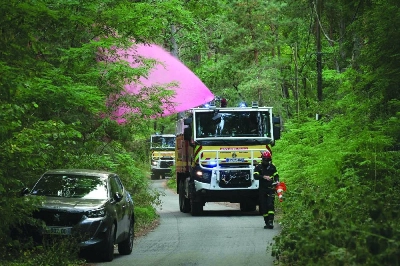
A fire truck sprays fire retardant into the Fontainebleau Forest on the outskirts of a wildfire near Noisy-sur-Ecole in France’s Ile-de-France region, Monday. (AFP)
International

Wildfire rages near Paris as heatwave scorches Europe

A wildfire tore through a historic forest near Paris Monday, ​forcing highway closures and mobilising water-bombing aircraft, ‌while Spain’s death toll from one of its deadliest wildfires rose to 13, as much of western Europe ‌simmered in a string of heatwaves. The region is ‌enduring its third heatwave of the summer, with tinder-dry vegetation ‌and high temperatures fuelling blazes from the Iberian Peninsula to France. Many scientists say climate change is making wildfires more frequent and difficult to combat. France deployed hundreds of firefighters to tackle a fast-moving blaze that broke out alongside a motorway near Fontainebleau, home to one of France’s best-known royal palaces. The death toll from last week’s devastating wildfire in Spain’s southern province of Almeria reached 13 after a 93-year-old British woman died from burns on Sunday, with 10 people still missing as of Monday, according to authorities. Visiting Almeria Monday, Prime Minister Pedro Sanchez called to reinforce fire prevention in the country. But the impact of the summer scorchers could be more grim. Scientists monitoring so-called excess deaths said there were thousands more fatalities recorded ​than normal during a heatwave that swept through Europe and Britain at the end of June. Just 70 kilometres (43.5 miles) from Paris, the Fontainebleau wildfire forced the closure of the A6 highway linking Paris with Lyon and the south, and, for ‌the first time in the Greater Paris area, the dispatch of air ​assets to contain the blaze which turned the skies black. Smaller fires in the area also disrupted high-speed ​train services. For the first time, Canadair water-dumping aircraft skimmed over the river Seine filling their tanks. Up to 800 people were evacuated from their homes. Although the fire was largely contained by Monday afternoon, wind gusts made the task challenging, authorities said. Interior Minister Laurent Nunez said the circumstances of the fire were suspicious: “There were around ten points where the fire started within a 1,000-metre radius, which suggests it may have been started deliberately.” French authorities say an estimated 32,000 hectares of land - roughly the size of Orlando, Florida - have burned so far this year, more than in the whole of 2025. Some 26 million people in France were under a red heatwave warning Monday, including the greater Paris region. Forecasters say the heatwave is expected to continue until the middle of the week. A new heatwave, expected to last ‌at least a week, is about to hit neighbouring ‌Italy, bringing high humidity and tropical nights, meteorologists say. Thermometers in inland areas of Sardinia could reach 42-43 degrees Celsius (108-109 Fahrenheit) today. The current bout of hot weather follows scorching temperatures at the end of May and the end of June, which broke several daily records. Extreme weather gripping the region has damaged crops, affected power output from nuclear plants and increased freight transport costs along the Rhine river in Germany, where lower water levels have prevented cargo vessels from sailing fully loaded. In Italy, farmers in the Emilia-Romagna region are forced to deploy more resources to ensure proper livestock management and maintain constant production of dairy products such as Parmesan cheese. European countries reported some 10,650 excess deaths during the record-breaking heatwave that engulfed the ​west of the continent in late June, official data showed. 

Gulf Times
Business

India’s surplus residue could power global aviation: Report

India’s vast reserves of surplus crop residue, combined with record-low green hydrogen prices, could fuel not only its own aviation sector but also airlines worldwide, a new study has said. The report, prepared by the India Energy and Climate Centre, the UC Berkeley Goldman School of Public Policy, and the Energy Innovation Policy and Technology, stated that power-and-biomass-to-liquids (PBtL) sustainable aviation fuel (SAF) offers India the least-cost pathway to decarbonise air travel while reducing dependence on imported oil and cutting air pollution from crop fires. The report noted that India imports nearly “90%” of its crude oil, leaving the country exposed to price volatility and geopolitical risks. Aviation turbine fuel demand, which accounted for less than “4%” of oil consumption in 2024, is expected to rise six-fold by 2050, increasing vulnerability to supply shocks, it pointed out. Seasonal burning of crop residue remains a major contributor to India’s air pollution, with New Delhi recording the worst air quality among global capitals. Farmers burn an estimated “130mn tonnes” annually, causing between “44,000” and “98,000” premature deaths each year. The pollution also reduces work attendance and performance, lowers economic activity, raises healthcare costs, worsens soil quality, and deters tourism, the study stated. India’s carbon dioxide emissions have tripled since 2000. While short-term climate goals are on track, analysts warn that much more ambitious actions will be needed to achieve net-zero emissions by 2070, according to the report. The study said India’s plummeting solar electricity costs, “among the lowest globally,” have enabled green hydrogen prices as low as “$3.1–4.5 per kg.” Combined with surplus residue of up to “235mn tonnes,” this creates a unique opportunity to produce SAF at costs up to “40%” below global benchmarks. PBtL SAF could reach price parity with fossil jet fuel in the 2030s, depending on crude oil prices and supportive policies. In the meantime, India could serve rising international demand for SAF blending mandates and corporate procurement goals, the study stated. Beyond economics, the report said PBtL SAF could deliver wide-ranging co-benefits. By creating demand for residue that farmers currently burn, it could reduce air pollution, avoid premature deaths, increase productivity, boost tourism, and strengthen rural economies through new revenue streams and jobs in collection and densification. The report identified Delhi, Pune, and Mumbai as prime sites for first-of-a-kind projects, given their proximity to large airports and abundant residue supplies. Policymakers were urged to mobilise India’s public sector oil companies, including Indian Oil Corporation, Bharat Petroleum, and Hindustan Petroleum, to anchor early PBtL deployment. Their control of refining and distribution infrastructure, coupled with government-backed financing, could help absorb the risks of novel SAF facilities. The study cautioned against unintended consequences, stressing that only surplus residue should be used to avoid displacing soil nutrients or encouraging land use changes. It also warned against blanket support for SAF pathways that rely on food crops or fossil-based hydrogen. Among its recommendations, the report called for concessional finance and streamlined approvals for demonstration projects, trade policy alignment with EU and UK mandates, and incentives tied to avoided air pollution deaths. It also urged India to expand SAF blending targets beyond 5% in 2030 to provide longer-term business certainty. The authors concluded that India’s unique combination of low-cost green hydrogen and surplus residue could deliver domestically-produced jet fuel that is low-cost, low-emissions, and resource-efficient. With the right policy support, India could advance self-reliance, improve air quality, strengthen rural economies, and position itself as a global leader in aviation decarbonisation.

Gulf Times
Qatar

Ministry of Environment and Climate Change concludes summer training program for QU, UDST students

The Ministry of Environment and Climate Change, represented by the Hazardous Chemicals and Waste Department, concluded its summer training program for students of Qatar University (QU) and University of Doha for Science and Technology (UDST), with the participation of 30 male and female students, as part of its efforts to support national capacity building, qualify young talents, and enhance their contribution to the sustainable development process. The Ministry of Environment said in a statement Sunday that the training program extended over nine weeks for UDST students, and six weeks for QU students to develop students’ knowledge of modern concepts of environmental sustainability, and introduce them to the most prominent strategic initiatives and projects implemented by the Ministry in the areas of green development, environmental protection, and natural resource management.The Ministry of Environment indicated that the program, during its activities in the first and second weeks, focused on linking the academic aspect with practical and field applications, enabling students to directly learn about the specializations of the various departments in the ministry, which contributes to refining their skills and preparing qualified national cadres capable of supporting national efforts in the fields of environmental protection and sustainability.The ministry explained that the program began for UDST students by receiving them in the Hazardous Chemicals and Waste Department, which took over the supervision of the implementation of the program and coordination with the relevant departments, allowing the students the opportunity to learn about the ministry’s specializations and gain scientific and practical experiences through specialized lectures, field visits, and practical applications. During the program, UDST students participated in training programs in cooperation with the Radiation Protection Department and Green Development and Environmental Sustainability Department, where they learned the fundamentals of radiation protection, radiation safety requirements, safe uses of radiation technologies, and radiation monitoring and inspection.The students were also briefed on the ministry's efforts in sustainability, circular economy, green finance, biodiversity, and the role of modern technologies and artificial intelligence (AI) in supporting environmental work.QU students also began their training program in green development management and environmental sustainability, where they learned about sustainability concepts, the circular economy, and related national initiatives, and presented applied projects that promote innovation in finding sustainable environmental solutions.The students continued their training in the Environmental Assessment and Permit Department, where they learned about environmental impact assessment procedures and the issuance of environmental permits, efforts to protect the marine environment and preserve biodiversity, and topics related to environmental pollution, greenhouse gas emissions, and renewable energy projects. The ministry affirmed that the program comes within the framework of its ongoing commitment to developing national talent and enhancing cooperation with academic institutions, contributing to the preparation of young cadres capable of supporting the path of sustainable development and protecting the environment in the State of Qatar.

Gulf Times
Qatar

Environmental awareness among youth key to preserving natural resources: Minister of Environment and Climate Change

His Excellency Minister of Environment and Climate Change Dr. Abdullah bin Abdulaziz bin Turki Al Subaie stressed that investing in young people's environmental awareness and equipping them with environmental knowledge is fundamental to building a generation capable of preserving the country's natural resources and supporting its environmental sustainability efforts.HE the Minister made the remarks while honoring students and participating entities in the third edition of the 2026 Summer Environmental Club, organized by the Ministry under the theme "Guardians of the Environment." The two-week program brought together 26 students aged 11 to 17 and was attended by ministry officials and representatives of participating organizations.His Excellency said the Summer Environmental Club reflects the Ministry's commitment to offering educational programs that combine theoretical learning with practical experience, enabling participants to gain firsthand insight into environmental work and the State's efforts to protect the environment and conserve biodiversity.He emphasized that environmental protection begins with knowledge and awareness before becoming a daily practice and a shared responsibility. The enthusiasm and engagement demonstrated by the students during workshops and field visits, he added, reflect growing environmental awareness among younger generations and their readiness to contribute to national initiatives.His Excellency affirmed the Ministry's commitment to engaging young people through awareness and training programs that introduce them to environmental challenges and the solutions used to address them, while encouraging them to develop ideas and initiatives that support environmental protection.HE Minister of Environment and Climate Change Dr. Abdullah bin Abdulaziz bin Turki Al Subaie also expressed appreciation to the participating entities and Ministry departments for their contribution to the program, noting that their cooperation in organizing activities and field visits enriched the club's content and enhanced the students' learning experience.The two-week program featured a series of workshops and field visits covering environmental photography, recycling, environmental monitoring and inspection, marine biodiversity, the safe use of radiation, marine environmental protection, houbara bustard breeding, and hazardous waste tracking. The activities were designed to enhance participants' environmental awareness and provide them with practical experience in environmental conservation. 

Gulf Times
Qatar

QNL marks summer season with discovery, creativity, professional development

The Qatar National Library (QNL) has announced the launch of its summer programme, starting from the beginning of July, for heritage professionals, children, families, and career-minded adults. The programme covers cultural conservation, STEM exploration, creative arts, literacy, and professional development. The month opens with a specialsed gathering for the heritage community. On July 1, Qatar National Library, in its capacity as the IFLA PAC Regional Center for the Arab Region, presents the webinar “Emergency Grants for Cultural Heritage: Opportunities and Application Process,” delivered by Romana Delaporte, Project Co-ordinator at Cultural Emergency Response, an international NGO that provides first-aid support to cultural heritage threatened by conflict, climate change, or natural disaster. The session will explore the scope and objectives of available grants, the types of projects eligible for funding, application requirements and selection criteria, and practical guidance drawn from previously supported emergency response initiatives. The first of July also marks the start of the 2026 Summer Reading Challenge, offered in partnership with the Kutubee interactive reading platform. Running for six weeks until 15 August, the challenge encourages children aged 6 to 14 to keep reading through the summer months and to guard against the seasonal learning loss commonly known as the “summer slide.” Participants work toward reading goals scaled to their age group, building language skills, broadening their knowledge, and strengthening critical thinking and creativity along the way. The winners will be announced in September 2026. On 15 July, the Seventh Summer Camp opens, with each track designed to engage and inspire a different age group. The tracks run on a weekly basis. The Library welcomes its youngest visitors with the Fun Summer Camp for Toddlers, a bilingual two-hour play camp for children aged 1 to 4. Featuring sensory toys, building toys, art activities, and storytelling sessions, it offers a nurturing and imaginative environment for children and their families. Storytime for Children offers an equally enriching experience for children aged 7 to 12, combining expressive storytelling with puppetry to take young audiences on imaginative journeys through carefully chosen stories. The programme aims to foster a love of reading, stimulate imagination, and strengthen listening and communication skills in a joyful and nurturing setting. For children aged 7 to 10, a dedicated STEM activity blends science, technology, engineering, and mathematics through hands-on experimentation, inviting young participants to test ideas, solve problems, and explore how the world works in a spirit of curiosity and discovery. Teenagers aged 13 to 17 are invited to “Make with Me,” a craft and art-making session that draws older participants into a world of colour and imagination, encouraging creative expression in a lively and inspiring environment. Career development takes centre stage later in the month with “Skills Hub: Your 2026 Career Launchpad,” a three-part series running on July 21, 22, and 23. Led by Adrian Wallwork, author of more than 50 textbooks for publishers including Springer Nature, Cambridge University Press, and Oxford University Press, the series examines both how and how not to use AI tools at every stage of the job search. The first session, on July 21, addresses writing CVs, LinkedIn profiles, and cover letters that stand out to human recruiters and automated screening systems alike. The second session, on July 22 , prepares attendees for every stage of the interview process, from initial online assessments to in-person meetings. The third session, on July 23, examines the human skills most likely to endure in a rapidly changing job market and explores how to identify and develop them. Each session may be attended individually or as part of the full series. 

Gulf Times
Qatar

Msheireb Museums hosts MIKTA Climate Dialogue 2026

Msheireb Museums hosted the MIKTA Climate Dialogue 2026, in partnership with the Australian Embassy in Qatar, bringing together representatives from government, industry, academia and civil society to explore opportunities for advancing international climate cooperation ahead of COP31.Held at Bin Jelmood House on 17 June, the event convened under the theme "Accelerating Climate Action Through International Partnerships" and highlighted the contributions of MIKTA member countries - Mexico, Indonesia, the Republic of Korea, Türkiye and Australia - to global climate action.Commenting on the event, General Manager of Msheireb Museums Abdulla Al Naama said: "At Msheireb Museums, we believe museums can play a vital role as platforms for dialogue, learning and the exchange of ideas on issues that shape our societies and our future. Hosting the MIKTA Climate Dialogue reflects our commitment to fostering meaningful conversations that connect culture, knowledge and innovation, while bringing together diverse perspectives to address shared global challenges. We are proud to support initiatives that encourage collaboration and inspire collective action towards a more sustainable future."HE Australian Ambassador to Qatar Shane Flanagan said: "As Chair of MIKTA in 2026, Australia is proud to bring together governments, experts, business leaders and young climate advocates to discuss practical solutions to one of the defining challenges of our time. Climate change is a global challenge that requires global cooperation, and partnerships such as MIKTA play an important role in building consensus, sharing expertise and driving collective action.""Australia is committed to practical and ambitious outcomes that advance global climate action. We are also proud to be working alongside Türkiye to deliver COP31 through an innovative partnership that demonstrates a united purpose to tackle the shared global challenge of climate change."The programme featured two panel discussions and a presentation examining key dimensions of climate action. The first panel, Climate Diplomacy and International Cooperation, brought together the Ambassadors of the five MIKTA countries to discuss how diplomacy, multilateral engagement and international partnerships can advance climate ambition and support meaningful outcomes. The discussion was moderated by Neeshad Shafi, Chair of the Arab Youth Climate Movement Qatar, whose leadership helped steer a dynamic conversation on the role of governments, youth and civil society in addressing climate challenges.The second panel, Commercial Innovation and Practical Climate Solutions, explored how business, entrepreneurship and technological innovation can contribute to sustainable climate outcomes, with participants examining barriers to implementation, investment requirements and opportunities for scaling climate solutions across the region.The event also featured a presentation on Education and Future Climate Capability by Dr Mira Chitt, Program Coordinator and Assistant Professor in Smart Manufacturing Engineering at the University of Doha for Science and Technology, highlighting the importance of embedding sustainability within education systems and developing the workforce and technical expertise required for the green transition.Through initiatives such as the MIKTA Climate Dialogue, Msheireb Museums continues to advance its mission of creating spaces for dialogue and engagement, connecting local and global perspectives through programmes that address contemporary social, cultural and environmental challenges.Established in 2013, MIKTA is a cross-regional partnership of middle powers committed to supporting the rules-based international order and addressing shared global challenges through practical cooperation and dialogue. The Climate Dialogue provided a platform for participants to exchange perspectives, strengthen partnerships and identify practical pathways for accelerating climate action in the lead-up to COP31, which will be hosted by Türkiye, with Australia’s Minister for Climate Change and Energy serving as the President of Negotiations. 

Gulf Times
Qatar

Qatar participates in 64th session of UNFCCC

The State of Qatar participated in the work of the 64th session of the two United Nations Framework Convention on Climate Change (UNFCCC) Subsidiary Body meetings held in Bonn, Germany, as part of the preparations for the 31st Conference of the Parties (COP31), scheduled to be held in Antalya, Türkiye, in November.The State of Qatar’s delegation was headed by Assistant Undersecretary for Climate Change Affairs at the Ministry of Environment and Climate Change (MOECC) Eng. Ahmad Mohammed Al Sada, along with a number of government agencies in the country.Participation included attending official sessions, technical consultations, and meetings of negotiating groups, which discussed the implementation of the Paris Agreement, adaptation to the impacts of climate change, climate transparency, providing financing to developing countries, transfer of modern technologies, capacity building, and training of national cadres.The meetings also discussed ways to support countries in implementing their climate plans, and to enhance international cooperation to address the effects of climate change, in addition to a number of issues that will be presented at COP31.The participants stressed the importance of reaching practical and balanced results that take into account the circumstances and capabilities of countries, and contribute to strengthening the implementation of the UNFCCC and the Paris Agreement.Adherence to the principle of equity and common responsibilities was also emphasized, taking into account the different capabilities and national circumstances of countries, and providing the necessary support to developing countries to implement their climate plans and achieve their development goals.The Bonn meetings are a key milestone in the course of international climate negotiations, as they provide a platform to discuss technical issues and bring countries closer together, in preparation for reaching consensus outcomes during COP31.

MIKTA Climate Dialogue 2026 held at Msheireb.
Qatar

Msheireb Museums, MIKTA rally Global Climate Action

Qatar’s role as a hub for global climate diplomacy received a significant boost recently as Msheireb Museums hosted the MIKTA Climate Dialogue 2026 to accelerate international environmental action. The high-level event, held at Bin Jelmood House in partnership with the Australian embassy in Qatar, brought together the MIKTA member nations—Mexico, Indonesia, the Republic of Korea, Türkiye, and Australia—to catalyse multilateral co-operation ahead of the COP31 summit later this year. Msheireb Museums general manager Abdulla al-Naama highlighted the shifting responsibility of heritage spaces, stating that cultural institutions must actively engage with contemporary crises. “We are a space for dialogue and for shedding the light on current issues,” al-Naama said. “Cultural institutions and museums should be places not only to discuss history, but also it should be places that discuss and open the platform and the dialogue for current issues.” Al-Naama underscored Msheireb Downtown Doha’s (MDD) legacy as a blueprint for future urban planning, noting that the Hamad Bin Jassim Museum specifically focuses on the project’s core of sustainability. He emphasised the museum’s role in “educating the world about sustainable cities” and ensuring these local insights “support all of Qatar’s efforts in climate change and sustainability.” The dialogue featured two panel discussions exploring practical frameworks to reduce global emissions while maintaining energy reliability. Australian ambassador to Qatar Shane Flanagan, whose country currently chairs the informal five-nation bloc, emphasised that the alliance provides a powerful, inclusive mechanism to support a rules-based international system. “When you bring sort of five countries together like Mexico, Indonesia, Korea, Turkey and Australia, what we’re doing is we have a collective voice that’s quite a powerful one,” Flanagan said. With Türkiye serving as the president-designate for COP31 and Australia co-chairing negotiations, Flanagan noted the event was deliberately timed to “generate some momentum” ahead of the global summit. He added that the discussions successfully delivered “practical ways that parties can really help to accelerate these efforts to reduce emissions while also making sure that energy remains reliable.” Flanagan also stressed that empowering the next generation remains central to the bloc’s environmental mandate. “Youth are right at the heart of what we’re trying to achieve, which is to keep one and a half degrees within reach,” Flanagan said. 

Gulf Times
Qatar

Ministry of Environment and Climate Change launches summer environmental club

The Ministry of Environment and Climate Change (MECC) is preparing to launch the third edition of its Summer Environmental Club Program, themed "Guardians of the Environment," running from June 21 to July 2. This initiative is part of the Ministry's efforts to instill a culture of sustainability in young people and raise their awareness of environmental issues.The club targets students aged 11 to 17 through programs that combine theoretical knowledge with practical application. It is one of the Ministry's awareness initiatives aimed at preparing a generation more connected to environmental issues.In this context, Director of the Public Relations and Communications Department at the Ministry, Dr. Farhoud Hadi Al Hajri, confirmed in a statement to Qatar News Agency (QNA) that the third edition of the club has reached its full capacity of 20 students.He also noted that the early registration reflects the ministry's success in reaching its target audience and demonstrates the growing public awareness of the importance of programs that combine knowledge with the development of positive behavior among young people.Dr. Al Hajri said that the summer environmental club represents one of the qualitative initiatives that reflects the role of corporate communication in supporting environmental work, by transforming awareness messages into practical programs close to the community, noting that environmental awareness is no longer limited to media publication, but has become dependent on building interactive experiences that contribute to enhancing environmental responsibility among various groups, especially the youth.He added that the ministry has prepared a comprehensive program combining specialized workshops, interactive activities, and field visits, allowing participants to learn about environmental work in a simplified manner and understand the ministry's role in protecting the environment and preserving natural resources in the State of Qatar.Dr. Al Hajri noted that this year's edition builds upon the successes of the previous two editions, which contributed to establishing the club's position as a summer program that combines education, awareness, and entertainment, bringing students closer to environmental issues through practical and interactive methods.He stated that the program includes specialized workshops on environmental impact assessment for projects, mobile environmental photography, environmental monitoring, the safe use of radiation, and hazardous waste tracking, in addition to topics related to technology and environmental protection. It also features field visits to learn about environmental monitoring and analysis applications and air quality monitoring.He emphasized that the club aims to build an early relationship between young people and the environment by translating environmental concepts into daily practices and instilling in them that environmental protection is a shared responsibility based on behavior and commitment alongside knowledge. He expressed his confidence that the participants will become ambassadors of environmental awareness within their families, schools, and communities.Director of the Public Relations and Communications Department at the Ministry Dr. Farhoud Hadi Al Hajri concluded his statement to QNA by saying that the Summer Environmental Club is one of the important initiatives implemented by the Ministry to instill a culture of sustainability in young people. The ministry looks forward to the third edition having a tangible impact on raising students’ awareness and encouraging them to actively contribute to protecting the Qatari environment and preserving its resources for future generations. 

Gulf Times
Qatar

Ministry of Environment and Climate Change launches digital service for safe disposal of electronic waste

The Ministry of Environment and Climate Change announced the launch of a new digital service for the safe disposal of electronic waste through its official website. This comes as a part of the ministry's efforts to enhance the digital transformation of its environmental services provided to the public.In a statement released Thursday, the ministry explained that the service allows individuals to submit requests for the disposal of electronic waste through the ministry’s website, in cooperation with licensed national companies that receive, transport and handle the waste in accordance with approved environmental requirements. The service is accessed by submitting an electronic request and specifying the type of waste and its location, after which coordination will be made with the competent authority to collect and transport in a safe manner. This ensures that this type of waste is isolated from other wastes and treated in an effective and safe manner. Director of the Industrial Inspection and Pollution Control Department at the Ministry of Environment and Climate Change Dr. Mohammad Ayed Al Shammari confirmed that the digital service for the safe disposal of electronic waste through the ministry’s website represents a step within a broader national path to develop waste management, moving it from traditional methods to a more organized and efficient system based on employing digital solutions, increasing community participation, and strengthening partnership with the private sector.Dr. Al Shammari said that electronic waste has become an important environmental issue, in light of the expansion in the use of electrical and electronic devices and the accelerating pace of their replacement. This calls for the development of practical solutions that help in collecting, sorting and directing them to approved routes, instead of remaining in homes or being disposed of improperly.He added that this service reflects the ministry’s keenness to transform environmental awareness into an easy daily practice, through the contribution of community members to protecting the environment via the ministry’s website. He pointed out that the success of modern environmental initiatives does not depend on the efforts of the government sector alone, but on the integration of the roles of individuals and all parties.He explained that launching this service represents an important step towards regulating the handling of this type of waste, and facilitating access for members of society to a safe and approved mechanism for disposing of unused electrical and electronic devices. Dr. Al Shammari stressed that electronic waste requires special management, given that it may contain hazardous materials, such as heavy metals, batteries, and some components that may affect the environment and human health if disposed of improperly.He pointed out that the digital service allows users to submit a request for electronic waste collection by entering the required data and specifying the type of devices and their location on the ministry's website. Then coordination will be made with licensed national companies to receive, transport and handle them in accordance with approved environmental regulations.Dr. Al Shammari stated that the ministry is proceeding with the implementation of quality initiatives that contribute to establishing a culture of sustainability and reducing reliance on traditional waste disposal methods, in line with the goals of Qatar National Vision 2030, and supporting the state’s efforts to protect the environment and preserve its resources for future generations.

Gulf Times
Qatar

Qatar reports successful winter camping season

The 2025-2026 winter camping season has been described as "largely successful," with high turnout of citizens and residents supported by well-organized camps and comprehensive services. Speaking to Qatar News Agency, Chair of the Winter Camping Committee at the Ministry of Environment and Climate Change, Hamad Salem al-Nuaimi, highlighted the key achievements of this year’s season, including stronger adherence to environmental regulations, improved organizational infrastructure for campsites, and heightened awareness among campers about protecting the natural environment.He also outlined the main challenges, such as the rising number of campers placing pressure on sites and services, and some non-compliant practices at the start of the season. These were addressed through intensified inspection campaigns and the use of modern monitoring technologies to ensure compliance. Al-Nuaimi noted that the Winter Camping Committee implemented a range of measures to safeguard both the environment and camper safety. These included precise campsite allocations, protection of environmentally sensitive areas, provision and regular collection of waste containers, and strict regulations on vehicle use in desert and natural areas.He pointed out a marked improvement in compliance compared with previous seasons, attributing it to successful awareness campaigns. At the same time, he emphasized that some areas still require further organization and monitoring, with solutions under study for future seasons. Al-Nuaimi said key lessons from this season include early planning, greater reliance on digital permit systems, and strengthened partnerships with relevant authorities. The ministry is continuing to enhance oversight mechanisms and awareness programs to ensure the sustainability of Qatar's natural environment.He concluded by stressing that these combined efforts help foster a culture of environmental responsibility, urging all campers to follow regulations and contribute to the protection of Qatar's terrestrial environment as a shared responsibility. 

Gulf Times
Region

GCC renewables surge amid wetter weather and stable heat

Gulf Cooperation Council (GCC) countries posted a sharp rise in renewable energy output in 2024, driven by explosive growth in solar and wind capacity, even as the region experienced notably higher rainfall amid broader climate shifts, according to the GCC Statistical Center’s “Climate Statistics 2024” report.The findings, released Saturday, highlight the GCC’s accelerating transition toward sustainability while documenting measurable changes in key climate indicators across the six member states.Solar capacity recorded an average annual growth rate of 88.1% between 2013 and 2024, with electricity generation surging from just 0.13 GWh in 2013 to 23.5 TWh in 2023. Wind capacity expanded significantly over the same period, rising from 4.8 MW in 2015 to 567 MW in 2024.Rainfall across the GCC jumped 49.4% in 2024 compared with the long-term 1980–2010 average, pointing to evolving weather patterns in the arid region. At the same time, temperature readings from 23 approved monitoring stations remained relatively stable, with no recorded extremes exceeding 49°C between 2012 and 2024. The report also notes progress in climate resilience measures. All GCC states now operate advanced mobile-based early warning systems using cell broadcast technology, and climate change adaptation and awareness topics have been integrated into national school curricula.The data underscores the dual reality facing the Gulf: a determined push to diversify the energy mix and build resilience, even as climate variables show signs of change. Solar and wind expansion reflects ambitious national visions aimed at reducing reliance on hydrocarbons while capitalising on the region’s abundant natural resources.Analysts view the rapid renewable growth as a positive step toward the GCC’s collective sustainability goals, though overall renewable penetration remains modest relative to the region’s total energy needs.The GCC Statistical Center, based in Oman, compiles the report using national, regional, and international data to support evidence-based policymaking on climate adaptation and mitigation.This latest edition arrives as Gulf nations continue to balance economic diversification with environmental stewardship amid global calls for cleaner energy.