Author

Friday, July 17, 2026 | Daily Newspaper published by GPPC Doha, Qatar.
 Peter Alagos
Peter Alagos
Peter Alagos reports on Business and general news for Gulf Times. He is a Kapampangan journalist with a writing career of almost 30 years. His photographs have been published in several books, including a book on the 1991 Mt. Pinatubo eruption launched by former Philippine president Fidel V. Ramos. Peter has also taught journalism in two universities.
Michael Trick, Dean of Carnegie Mellon University in Qatar.
Business
Human capital is Qatar’s top business advantage: CMU-Q dean

Qatar’s long-term policy consistency and its concentrated educational infrastructure provide the country with a distinct competitive advantage as a regional business hub, according to Michael Trick, Dean of Carnegie Mellon University in Qatar.“Qatar’s primary competitive advantage lies in its world-class educational ecosystem, spanning Education City, Qatar University, and other local institutions. This intense national focus on human capital development is paired with remarkable political and economic stability,” Trick told Gulf Times.International businesses value predictability when choosing a regional headquarters, Trick emphasised, noting that Qatar’s leadership has maintained a consistent development vision for three decades, creating high levels of corporate confidence.“The vision articulated by Qatar’s leadership has remained exceptionally consistent for three decades. This predictable, long-term commitment to development provides immense confidence to international businesses deciding where to anchor their regional operations,” he explained. While neighbouring Gulf states are pursuing parallel economic diversification agendas, Trick does not see this as a zero-sum regional conflict, further explaining that the true competition remains global. “The true competition for Gulf states is not with one another, but with the global market. Economic diversification is a global phenomenon, and there is ample room for multiple regional hubs to succeed. While various Gulf nations are targeting similar macroeconomic sectors, their distinct local cultures, historical contexts, and educational frameworks naturally result in unique areas of specialisation and differentiation,” he pointed out. Branch campuses operating within Education City operate as permanent fixtures of the local economic architecture. They are deeply committed to expanding the domestic knowledge-based economy, Trick pointed out.“We also bring an international perspective: our students and graduates learn to be global citizens who collaborate across disciplines and cultures. This is very important for a country like Qatar that plays such a critical role in the region, and indeed the world,” he said. According to Trick, a small domestic population means workforce augmentation remains vital for Qatar to sustain its status as a regional financial, logistics, and diplomatic hub. Historically, the state relied on paying a premium to foreign firms to establish a temporary presence. This approach filled immediate talent gaps before the domestic educational framework matured, he said. Trick said the alternative model focuses on sustainable talent acquisition through higher education investments. Local branch universities attract top-tier international and Qatari minds. These gifted students frequentlychoose to remain in the country to build careers after graduation, he stressed. “Private sector engagement has been outstanding. We have partnered closely with organisations like QNB, Qatar Investment Authority (QIA), Snoonu, and numerous other companies. These entities have been highly supportive of our educational mission, collaborating with our students on practical projects, hiring our graduates, and deeply valuing their skill sets,” he said earlier. Room for growth persists when comparing the local market to highly mature economies like the US. Regional corporates are only beginning to treat universities as primary research and development partners. This corporate mindset is shifting as collaborative research initiatives steadily expand, Trick added.

Gulf Times
Business
Global airports reform personnel strategies to safeguard operational growth

Global airport operators are reforming their human resources strategies to treat workplace inclusion as a direct driver of commercial and operational performance, according to industry insights released by Airports Council International (ACI) World.The shift comes as the global aviation sector navigates the erosion of traditional personnel frameworks alongside a sharply rising demand for leaders capable of managing complex, modern airport environments.According to the ACI World findings, operators navigating highly constrained talent markets are forced to move away from narrative-driven programmes and instead embed equitable behaviours into daily leadership and decision-making frameworks.This operational pressure requires airport management teams to prioritise internal mobility and raw potential over traditional candidate profiles to improve staff retention, the report pointed out, and further noted that establishing high levels of psychological safety within operational teams directly strengthens an organisation’s overall adaptability.“We all know that effective leadership is about bringing the best out in other people. Often leaders are those who have had success through their own technical skills or the efforts of their team. Organisational leadership is at another level, going from hands-on guidance to purely motivating others to perform. The question is: how can we prepare people to step out of the 'doing' and move into 'inspiring'?” Galapagos Ecological Airport human resources manager Sara Santana said.The report also highlighted that standard classroom-based leadership courses fail to replicate the practical experiences required to manage senior positions within the aviation industry.“No one is truly ready to take on the most senior roles in an organisation until they have been put in the position to influence and inspire large groups of people. Experience is the only way to test and refine true leadership skills outside of the normal chain of command. How can a leader’s words and actions inspire the achievement of a strategic goal for the entire organisation?” former Halifax International Airport Authority chief people officer Mike Christie explained.To address these leadership gaps, the report suggested that airport administrators use constant industry changes, such as new regulations or emerging geopolitical considerations, as active training grounds for high-potential staff.Building a genuine learning culture in an operational environment starts with changing the core belief that learning is separate from daily duties. In airports, where daily priorities are constant, learning cannot depend solely on formal courses or quiet periods, the report noted.“Every delay, queue issue, baggage challenge, safety event, or customer feedback point creates an opportunity to learn. Daily briefings, post-shift debriefs, KPI reviews, and cross-functional discussions allow teams to ask what happened, why it happened, and what should be improved next time,” stated the report.At Grantley Adams International Airport, using live operational performance in this way helps teams solve problems faster, improve service standards, and build confidence in continuous improvement.“These daily habits are important because they create the foundation for long-term learning. When employees experience that learning leads to better results, reduced stress, and stronger teamwork, they begin to value development rather than see it as an extra burden.“From there, organisations can build long-term development pathways such as technical training, leadership programmes, mentoring, cross-functional exposure, and succession planning. Employees are far more likely to seek these opportunities when a learning mindset already exists in the daily operation,” the report stated.Grantley Adams International Airport director of operations Piétrick Voyer said, “In my experience, when short-term operational learning is consistent, it naturally evolves into a long-term culture where people actively pursue growth, capability, and career progression.”Mature airports anchor workforce planning in a competency framework, typically organised around a handful of knowledge areas and several hundred specific competencies. This shared vocabulary is what makes a meaningful training needs assessment possible, the report stated.A well-designed assessment layers four distinct perspectives on the same workforce, which includes strategic priorities, current competencies, employee aspirations, and observed skill gaps, according to the report.“The value lies in the convergence. Where all four lenses point to the same competencies, the signal is unambiguous, and the airport can invest with confidence. Where they disagree, the tension is just as useful: skills employees want but that aren’t strategic, real gaps the workforce hasn’t yet named, or ambitions that need investment to become actual capability. That is where training stops being a checklist and becomes a conversation about the airport’s future,” ACI World director of strategic delivery Yassine Zerrouk stated. 

Fadi Moukaddem, senior vice-president and group country manager for the UAE, Kuwait and Qatar at Visa.
Business
Qatar banks seen poised to evolve from digital to AI-native

The Qatar Central Bank has helped support the country’s banks and merchants toward the next wave of digital payment innovation, with some already exploring how to become “AI native,” according to a senior executive at Visa.Fadi Moukaddem, senior vice-president and group country manager for the UAE, Kuwait and Qatar at Visa, told Gulf Times that Qatari banks and merchants have moved well beyond basic digitisation.“I’m very happy to report that partners, like banks and merchants in Qatar, are already very digital native, and some of them are now thinking about how they can be AI native, not only digital native,” he said.“Every time I go to Qatar, I’m energised by the strong commitment to innovation and digital transformation of the government and of the partners, banks, and merchants,” Moukaddem noted, adding that Visa works closely with the QCB and the Ministry of Finance to enable these payments.According to Moukaddem, the push towards smarter, more secure digital commerce comes as global cross-border shopping faces a persistent problem: transactions that stall before they are completed.Global e-commerce has surpassed the $5tn threshold, with forecasts suggesting the broader digital commerce economy could exceed $20tn by 2030. As this opportunity expands, even small points of friction in the checkout experience can have significant implications for businesses.Moukaddem pointed to Visa’s recent Checkout Friction Report, which found that security concerns remain the biggest frustration for online shoppers in Qatar, cited by 39% of respondents, followed by the hassle of manually entering card details (32%).He said reducing checkout friction while maintaining trust and security represents an important opportunity for businesses to improve customer experience, increase conversion and drive growth in digital commerce.To address this, Visa has developed Visa Intelligent Commerce, which it offers to banks, merchants, and marketplaces to make online transactions more secure and trusted, Moukaddem explained.Card numbers are tokenised into random numbers so shoppers are not exposed at checkout, while authentication relies on passkeys such as fingerprints, PINs, or facial recognition, he continued. This helps give consumers greater control and confidence during the authentication process.“Ultimately, people adopt new technologies when they make experiences simpler, more convenient, and more secure,” Moukaddem said.Moukaddem said Visa partners closely with the Qatari government on this front, describing the regulatory environment as supportive of innovation and digital payments development. He said this collaboration positions Qatar’s ecosystem to develop quickly and stay ready for future waves of financial technology and commerce innovation.He also pointed out that Qatar’s growing calendar of major events, from the Formula 1 race to large-scale conferences, is directly shaping how Visa tracks and plans for spending activity in the country.According to Moukaddem, inbound travel into the country continues to grow year after year, noting that Qatar has become a destination for sports and cultural experiences, helped by favourable weather during the winter months.“New travel corridors are opening into the country as a result,” Moukaddem noted.He said Visa’s priority for tourists is two-fold: making sure digital payment acceptance is available wherever visitors go, and encouraging them to spend locally rather than prepaying trips entirely at home.“We want visitors to be able to pay seamlessly and confidently in Qatar while supporting local businesses and the broader economy,” he said.Moukaddem explained that Visa monitors major events by comparing spending data from before, during, and after each one to assess their broader economic impact and spending patterns.Using the Doha Formula 1 race as an example, he said the spending and economic activity generated around major events can be significant.“These events bring cross-border spend, B2B business, and a lot of set-up,” he said, pointing to the logistics behind moving cars, crews, hotel bookings, and airline capacity for a single race weekend.He noted Visa has a partnership with Qatar Airways on co-branded cards tied to some of these events.Moukaddem stressed that Formula 1 is only one example on a much longer calendar that includes the Qatar Economic Forum, Web Summit Qatar, and large concerts, among others. 

Qatar’s strongest showing in the index came in Market Perception, where it ranked second in the GCC, an outcome that StartupBlink linked to positively assessed conditions around governance, stability, mobility, and international accessibility.
Business
Qatar seen as regional base for tech, services and research firms

Qatar has ranked fourth among Gulf Cooperation Council (GCC) member states in the StartupBlink Innovators Business Environment Index (IBEI) 2026, placing 59th out of 125 countries worldwide with a total score of 52.287 points.Regionally, Qatar placed fifth in the Middle East and Africa category.The index applies a consistent methodology based on more than 30 measurable parametres across 125 countries, scoring nations on a 0-100 scale to reflect the level of friction and institutional support for starting and operating a business, the report stated.Qatar’s strongest showing came in Market Perception, where it ranked second in the GCC, an outcome that StartupBlink linked to positively assessed conditions around governance, stability, mobility, and international accessibility.The country also placed second in the bloc under the ‘Ease of Operating a Business’ pillar, as well as second in the ‘Digital Infrastructure’ category, which measures Internet speed and Internet freedom.On taxation, Qatar ranked third both regionally and globally, with its ‘Top Personal Income Tax Rate’ and ‘Corporate Tax Rate’ parametres landing in the top 25% of the entire index.“The Access to Capital & Financial Infrastructure Functional Category, which measures credit availability, banking connectivity, investment channels, and financial-tool accessibility, represents an area where Qatar has scope to further improve its performance within the Index,” the report pointed out.“Qatar’s business environment benefits from long-term planning and a deliberate shift away from reliance on hydrocarbons. Qatar National Vision 2030 is the country’s anchor strategy and positions Qatar as a regional base for companies working in technology, services and applied research,” the report stated.Qatar Development Bank (QDB) was cited as the “backbone of startup and small and medium-sized enterprise (SME) financing,” offering capital, export tools, and incubation support through platforms such as the Qatar Business Incubation Centre (QBIC), while the Investment Promotion Agency Qatar (Invest Qatar) serves as the main entry point for investors.The Qatar Free Zones Authority (QFZ), which oversees Ras Bufontas near Hamad International Airport and Umm Alhoul next to Hamad Port, offers corporate tax exemptions, customs benefits, and full foreign ownership for qualifying companies.“The absence of personal income tax adds another incentive for founders and skilled professionals considering relocation,” the report stated.Qatar Science and Technology Park (QSTP), based within Education City, provides facilities for testing, licensing, and commercialisation, while the Qatar Financial Centre (QFC) offers a separate legal and regulatory system tailored to professional services, financial firms, and high-growth industries.“Qatar’s placement in the IBEI stands above its ranking in the Global Startup Ecosystem Index 2025, indicating stronger assessments of its underlying business-environment conditions compared to its startup ecosystem outcomes,” the report added. 

External Affairs Minister Dr S Jaishankar of India during his visit to Doha recently.
Business
India, Qatar to fast-track strategic trade, investment ties, says minister

India and Qatar have agreed to accelerate the development of a bilateral strategic partnership through new economic pathways in technology, food security, and high-tech manufacturing, according to External Affairs Minister Dr S Jaishankar. Jaishankar recently concluded his visit to Doha after reviewing the full spectrum of bilateral relations with His Excellency the Prime Minister and Minister of Foreign Affairs Sheikh Mohammed bin Abdulrahman bin Jassim al-Thani, during which the two leaders focused on energy, trade, and investments, while identifying new mechanisms to boost economic integration between the two nations.Agriculture is also seen as one of the sectors for collaboration and joint investment. Union Minister of State Dr Jitendra Singh earlier noted that artificial intelligence (AI) interventions could add approximately Rs70,000 crore (QR30.8bn) to India’s agricultural economy. “AI is increasingly becoming an indispensable tool for predictive crop management, precision irrigation, weather-based advisories, and efficient utilisation of agricultural resources,” stated Singh, who addressed the 17th Agriculture Leadership Conclave 2026, organised with the support of the Ministry of Food Processing Industries in New Delhi.Singh noted that the next wave of the country’s startup revolution must emerge from farms to make agriculture a major source of employment and wealth creation. During the state visit of His Highness the Amir Sheikh Tamim bin Hamad al-Thani to India in February last year, Qatar expressed significant interest in investing in India’s food security and agri-logistics sectors, viewing technology-led farming as a priority for bilateral cooperation, among other strategic sectors. The Joint Working Group on Trade and Commerce has been elevated to a Ministerial-level Joint Commission to oversee the expanded strategic partnership during HH the Amir’s state visit. This institutional mechanism will review the entire spectrum of economic relations and facilitate structured investment flows, India’s Ministry of External Affairs stated. The diplomatic momentum follows a commitment by the Qatar Investment Authority (QIA) to invest “$10bn” in India across infrastructure, advanced manufacturing, and the digital economy, data from the Ministry of External Affairs also showed. During his first visit to Qatar in October 2025, Commerce and Industry Minister Piyush Goyal stated that India and Qatar are likely to finalise a free trade agreement (FTA) and a Bilateral Investment Treaty by the third quarter of 2026. Goyal said he discussed the contours of the terms of reference of the FTA during a meeting with the Minister of Commerce and Industry His Excellency Sheikh Faisal bin Thani bin Faisal al-Thani, including plans to fast-track it to double trade and business from “$14bn” to “$30bn” by 2030. He also said investment targets for Qatari sovereign capital include banking, insurance, data centres, and AI ventures. According to Goyal, the QIA has already invested between “$4bn” and “$5bn” in Indian projects, with an additional “$1bn” to “$1.5bn” currently “in the pipeline at finalisation stages.”“They are looking at good promoters and good projects in India, and I am hopeful that our associations will certainly provide very good opportunities for investment in manufacturing and in services,” Goyal stated. Data from India’s Ministry of Statistics and Planning Implementation showed that India’s real GDP expanded 7.7% in FY2026, remaining the fastest-growing major G20 economy, which forms the core of the macroeconomic pitch to Qatari sovereign capital.Digital connectivity has also advanced with the operationalisation of India’s Unified Payments Interface (UPI) at QNB points of sale, the Ministry of External Affairs stated, adding that this fintech integration serves as a template for the internationalisation of India’s digital public infrastructure across the Gulf region. Goyal emphasised the transformative potential of UPI in strengthening bilateral trade and financial integration: “UPI is not just a technology solution, not just a digital payment solution, but has the potential to revolutionise trade between Qatar and India. It’s the celebration of India’s technology...a symbol of trust across borders.”In the manufacturing sector, Tata Electronics has emerged as a key partner for global electronics supply chains, overtaking Foxconn in iPhone export value during the current production-linked incentive period, reported the Business Standard, which also stated that Tata Electronics assembled $26.3bn worth of devices for export, compared to $25.6bn by Foxconn during the five years ending in 2026. This manufacturing shift was also highlighted as a priority sector on the India-Qatar Joint Commission’s growth list for future institutional investment during Goyal’s high level visit to Doha last year.

Yevhen Fedoranchuk, director of Prime Agriculture Trading.
Qatar
Ukraine eyes Qatar agri investment

A Ukrainian agriculture firm sees opportunities for Qatar to participate not only in commodity supply but also in food processing, logistics infrastructure, and joint ventures.“We also view Qatar as a potential strategic investment partner for the development of international agricultural commodity trading,” Yevhen Fedoranchuk, director of Prime Agriculture Trading, told Gulf Times.Fedoranchuk said Ukraine remains “one of the world’s most important agricultural producers,” offering attractive opportunities for Qatari investors seeking stable, long-term exposure to the sector.“Through partnerships, trade finance, and joint ventures, Qatari institutions could participate in the purchase and sale of agricultural commodities in international markets, leveraging Ukraine’s expertise in the production and export of grains and oilseeds,” he explained in an exclusive interview.According to Fedoranchuk, the “greatest opportunities” will come from combining Qatar’s investment capacity with Ukraine’s agricultural production and export expertise. He noted that such cooperation would strengthen global food supply chains while creating mutually beneficial opportunities in international commodity trading.“Beyond agricultural commodity trading and trade finance, some of the most attractive opportunities for Qatari investors lie in direct investments in agricultural assets and infrastructure,” he explained.Ukraine’s fertile land and role as “a leading supplier of grains and oilseeds” make it a compelling destination, he noted. “At the same time, the years of war and economic instability have created a unique investment environment in which high-quality assets can be acquired or financed at valuations significantly below their long-term intrinsic value,” he pointed out.Fedoranchuk described this as a rare opportunity for strategic investors to participate in the development of “one of the world’s most important agricultural regions.”“Investments in grain elevators, storage facilities, logistics terminals, port infrastructure, processing plants, and agricultural trading platforms offer significant return potential as Ukraine continues its recovery and further integration into the global economy,” he emphasised.According to Fedoranchuk, the most effective model is a long-term partnership that combines Qatar’s investment capabilities with Ukraine’s expertise in production, storage, logistics, and export operations.“Such cooperation can not only generate attractive investment returns but also strengthen food security through direct access to supply chains at the country of origin,” he stressed.Emphasising the importance of careful planning and innovative thinking to navigate the evolving market landscape and capitalise on emerging trends and shifts, Fedoranchuk expressed confidence regarding the future, highlighting that the next few years are likely to present extraordinary opportunities for investors who are willing to adopt a strategic mindset.“I am convinced that the coming years will create exceptional opportunities for investors who are prepared to think strategically and become part of the next stage of development of Ukraine’s agricultural sector,” he added. 

Qatar is putting in place a set of structural mechanisms, including venture studios, national innovation challenges, and corporate pilot partnerships, to move startups from the proof-of-concept stage into real commercial contracts, according to the Startup Genome Global Startup Ecosystem Report 2026.
Business
Venture studios, innovation challenges push Qatar startups towards contracts

Qatar is putting in place a set of structural mechanisms, including venture studios, national innovation challenges, and corporate pilot partnerships, to move startups from the proof-of-concept stage into real commercial contracts, according to the Startup Genome Global Startup Ecosystem Report 2026.“One critical lever is the transition from pilot projects to real contracts. Pilots create value only when they lead to adoption. Without clear pilot-to-procurement pathways, startups gain validation but not customers. When startups can see a clear route from testing to adoption, they invest more confidently and build capability faster,” the report stated.According to the report, Qatar Development Bank (QDB) has backed two venture studios that embed customer access into the venture-building process before a company launches.The Utopia Studio supports entrepreneurs building artificial intelligence (AI) ventures around identified industry problems, ensuring commercial relevance from the outset. The upcoming Rubix Studio takes the model a step further, building ventures in close coordination with a cross-sectoral corporate network and aiming to secure early commercial commitments before spinout, the report stated.In the report, Michael Lints, partner at Golden Gate Ventures, stated that corporate clients present one of the most stubborn timing challenges that startups face.“As investors, we understand the importance of customer access at every stage of the startup’s growth. Specifically, corporate clients can take a long time to convert to paying customers, and for startups, timing is everything.“Supporting founders in gaining C-suite access to corporations, presenting their solutions, and developing innovation together can have a long-term impact on the startup’s viability,” Lints stated.Programmes such as Scale Now and Ministry of Communications and Information Technology-led accelerators are explicitly designed to move startups beyond pilots toward commercial outcomes. Several have already enabled companies to secure local contracts and deals, the report stated.“Emerging models such as national innovation challenges create structured pipelines where top startups are guaranteed pilot opportunities with corporate sponsors, embedding demand directly into the innovation process.“Leading corporates such as Qatar Airways are contributing real industry challenges and acting as pilot partners, particularly in sectors such as logistics and operations where demand is strongest,” the report stated.Supported by some 22 incubators and innovation platforms, these mechanisms are converging toward what the report describes as a venture client model, one that is increasingly effective in helping startups secure early customers and generate revenue.Lyth Saeed, co-founder and COO of huupe, said in the report that QDB’s role was most visible in how quickly the company could move and grow.“As a founder building across the MENA region, resource efficiency and speed are everything. QDB helped us operate leaner, move faster, and focus more of our energy on growth and market expansion rather than operational complexity. In emerging and rapidly evolving markets like MENA, having infrastructure that scales reliably without requiring massive overhead is a huge advantage. QDB became an important part of enabling that next stage of growth for us,” Saeed stated.The report also pointed out that as these linkages strengthen, Qatar is positioned to evolve from a domestic innovation hub into a springboard for startups serving the wider Gulf Cooperation Council (GCC) and global markets. 

Dalia al-Khalaf, founder and managing partner at Rawdat Capital.
Business
Qatar seen as testbed for applied AI deployment

Qatar is poised to play a central role in the next phase of artificial intelligence (AI) by focusing on real-world deployment across key sectors of the economy and society, a top official of a Doha-based venture capital firm has said.“The greatest impact will come from applying AI across healthcare, education, energy, manufacturing, logistics, agriculture and public services,” said Dalia al-Khalaf, founder and managing partner at Rawdat Capital.She explained that while much of the global debate has centred on foundational models and infrastructure layers, the long-term winners will be those who integrate AI into industries, improve productivity, and solve challenges at scale. Al-Khalaf emphasised that Qatar’s vision, stability, and international outlook provide the right conditions for such integration, positioning the country as a platform for scaling applied AI solutions. “Artificial intelligence is undoubtedly more complex and more strategic. Governments will rightly focus on issues of security, governance and national interest. Regulation will play an important role. However, while regulation can influence the pace of adoption, it rarely determines the ultimate direction of technological progress,” she said. According to al-Khalaf, Rawdat Capital’s role is to ensure that Qatar has direct access to opportunities emerging from China’s innovation economy, particularly in AI, robotics, advanced manufacturing, clean energy, electric vehicles, and healthcare technology. She pointed out that China is increasingly setting global trends in these sectors, and Qatar’s ability to connect ecosystems, capital and markets will be critical in translating innovation into tangible outcomes. “One of the lessons from every major technology cycle is that innovation ultimately finds its way to the market. We believe the coming decade will reward those who build bridges rather than barriers,” al-Khalaf added. She further explained that Rawdat Capital is building the relationships, knowledge and infrastructure needed to make this vision a reality. Al-Khalaf said the firm’s experience in onboarding Chinese companies into the region demonstrates how introductions can be converted into successful outcomes. “We help translate not only language, but expectations, business practices and strategic priorities. Most importantly, we help convert introductions into successful outcomes,” she stated. She noted that Qatar’s ability to connect global ecosystems is becoming increasingly important as technology fragments geographically. “Countries that can successfully build bridges between major centres of innovation will become increasingly influential. We believe Qatar is exceptionally well positioned to play that role,” al-Khalaf emphasised. Al-Khalaf also highlighted the importance of trust in building such corridors, saying, “Being a bridge sounds simple, but in practice it requires trust on both sides.” The firm has already demonstrated success in onboarding Chinese companies into the region and securing meaningful opportunities for local stakeholders, al-Khalaf pointed out.She said, “Chinese companies often understand the quality of their technology but lack local relationships, market understanding and commercial networks across the GCC. Equally, many regional investors and institutions recognise China’s innovation leadership but do not always have the cultural understanding, language capabilities or relationships required to identify the right partners.“Rawdat operates between these worlds. We help translate not only language but also expectations, business practices, and strategic priorities. Most importantly, we help convert introductions into successful outcomes.”She emphasised that Qatar possesses the vision, stability, capital and international outlook required to become a central player in evolving global investment corridors that increasingly connect China, the Gulf and emerging markets.She noted that Rawdat Capital’s recent partnership with Guolian Investment Management reflects growing confidence among major Chinese institutions in Qatar’s role as a gateway to regional opportunity. Al-Khalaf further stressed that the next decade will be defined not by isolated technology blocs but by ecosystems capable of connecting innovation, capital and markets. “Our role is to ensure that Qatar has direct access to these opportunities through trusted relationships, deep market knowledge and proven execution capability,” she pointed out. “Qatar is uniquely positioned to become the leading gateway between China’s innovation economy and the opportunities emerging across the GCC and wider MENA region,” she also said.Earlier, al-Khalaf stated that Qatari investors are set to benefit from access to China’s technology ecosystem, with Rawdat Capital highlighting that many transformative technologies require patient capital, strategic partnerships, and a willingness to invest in future potential rather than short-term outcomes. The firm stressed that Qatar’s long-term outlook and ability to invest beyond short-term gains make it well placed to capture opportunities in China’s innovation economy.

The skyline of highrise buildings seen in Doha on Thursday. The S&P Global Purchasing Managers’ Index (PMI) rose to 47.6 in June from 45.9 in May, its highest in four months, signalling that the pace of decline in business conditions has slowed.
Business
Qatar private sector steadies in June, says S&P

Qatar’s non energy private sector showed signs of stabilisation in June, with firms reporting a return to normal operations and recovering demand.The S&P Global Purchasing Managers’ Index (PMI) rose to 47.6 in June from 45.9 in May, its highest in four months, signalling that the pace of decline in business conditions has slowed.Non energy output was broadly stable, ending a six month downturn, as companies cited recovering demand and stronger capacity. Construction activity rebounded during the month, helping to offset weakness in services.New orders continued to contract, though at a slower pace than earlier in the year. Firms pointed to business uncertainty, increased competition, and sectoral challenges in real estate and tourism. Wholesale and retail operators, however, reported gains in new work.Trevor Balchin, Economics director at S&P Global Market Intelligence, stated: “The PMI rose to a four month high in June and the outlook for the next 12 months improved notably, hinting that the non energy private sector was on the cusp of a recovery approaching the midway point of 2026.”“The June data collection period began on June 11, prior to the signing of an initial peace agreement between the US and Iran on June 17, and closed on June 23,” Balchin also said.Employment growth extended its 23 month sequence, though gains were modest. Workforce numbers rose in manufacturing and retail but declined in construction and services. Input purchases also increased for the first time in six months, allowing firms to replenish inventories, Balchin explained.Inflationary pressures remained a concern, Balchin noted. Input costs accelerated for the sixth consecutive month to a 20 month high, driven by steeper wage growth, while output charges rose at the fastest pace since December 2022. He noted that purchase price inflation eased slightly compared to May, suggesting raw material costs may have peaked.Despite these pressures, sentiment strengthened across all monitored sectors, according to S&P Global. The Future Output Index climbed to a four month high, with businesses anticipating improved market conditions once regional tensions stabilise. 

Gulf Times
Business
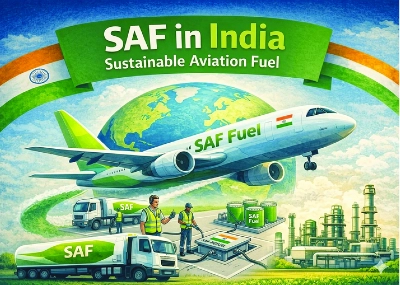
India’s vast reserves of surplus crop residue could power global aviation sector: Report

India’s vast reserves of surplus crop residue, combined with record-low green hydrogen prices, could fuel not only its own aviation sector but also airlines worldwide, a new study has said.  The report, prepared by the India Energy and Climate Centre, the UC Berkeley Goldman School of Public Policy, and the Energy Innovation Policy and Technology, stated that power-and-biomass-to-liquids (PBtL) sustainable aviation fuel (SAF) offers India the least-cost pathway to decarbonise air travel while reducing dependence on imported oil and cutting air pollution from crop fires.  The report noted that India imports nearly “90%” of its crude oil, leaving the country exposed to price volatility and geopolitical risks. Aviation turbine fuel demand, which accounted for less than “4%” of oil consumption in 2024, is expected to rise six-fold by 2050, increasing vulnerability to supply shocks, it pointed out.  Seasonal burning of crop residue remains a major contributor to India’s air pollution, with New Delhi recording the worst air quality among global capitals. Farmers burn an estimated “130mn tonnes” annually, causing between “44,000” and “98,000” premature deaths each year. The pollution also reduces work attendance and performance, lowers economic activity, raises healthcare costs, worsens soil quality, and deters tourism, the study stated.  India’s carbon dioxide emissions have tripled since 2000. While short-term climate goals are on track, analysts warn that much more ambitious actions will be needed to achieve net-zero emissions by 2070, according to the report.  The study said India’s plummeting solar electricity costs, “among the lowest globally,” have enabled green hydrogen prices as low as “$3.1–4.5 per kg.” Combined with surplus residue of up to “235mn tonnes,” this creates a unique opportunity to produce SAF at costs up to “40%” below global benchmarks.PBtL SAF could reach price parity with fossil jet fuel in the 2030s, depending on crude oil prices and supportive policies. In the meantime, India could serve rising international demand for SAF blending mandates and corporate procurement goals, the study stated.  Beyond economics, the report said PBtL SAF could deliver wide-ranging co-benefits. By creating demand for residue that farmers currently burn, it could reduce air pollution, avoid premature deaths, increase productivity, boost tourism, and strengthen rural economies through new revenue streams and jobs in collection and densification.  The report identified Delhi, Pune, and Mumbai as prime sites for first-of-a-kind projects, given their proximity to large airports and abundant residue supplies.  Policymakers were urged to mobilise India’s public sector oil companies, including Indian Oil Corporation, Bharat Petroleum, and Hindustan Petroleum, to anchor early PBtL deployment. Their control of refining and distribution infrastructure, coupled with government-backed financing, could help absorb the risks of novel SAF facilities.  The study cautioned against unintended consequences, stressing that only surplus residue should be used to avoid displacing soil nutrients or encouraging land use changes. It also warned against blanket support for SAF pathways that rely on food crops or fossil-based hydrogen. Among its recommendations, the report called for concessional finance and streamlined approvals for demonstration projects, trade policy alignment with EU and UK mandates, and incentives tied to avoided air pollution deaths. It also urged India to expand SAF blending targets beyond 5% in 2030 to provide longer-term business certainty. The authors concluded that India’s unique combination of low-cost green hydrogen and surplus residue could deliver domestically-produced jet fuel that is low-cost, low-emissions, and resource-efficient. With the right policy support, India could advance self-reliance, improve air quality, strengthen rural economies, and position itself as a global leader in aviation decarbonisation.  

Gulf Times
Business
India’s surplus residue could power global aviation: Report

India’s vast reserves of surplus crop residue, combined with record-low green hydrogen prices, could fuel not only its own aviation sector but also airlines worldwide, a new study has said. The report, prepared by the India Energy and Climate Centre, the UC Berkeley Goldman School of Public Policy, and the Energy Innovation Policy and Technology, stated that power-and-biomass-to-liquids (PBtL) sustainable aviation fuel (SAF) offers India the least-cost pathway to decarbonise air travel while reducing dependence on imported oil and cutting air pollution from crop fires. The report noted that India imports nearly “90%” of its crude oil, leaving the country exposed to price volatility and geopolitical risks. Aviation turbine fuel demand, which accounted for less than “4%” of oil consumption in 2024, is expected to rise six-fold by 2050, increasing vulnerability to supply shocks, it pointed out. Seasonal burning of crop residue remains a major contributor to India’s air pollution, with New Delhi recording the worst air quality among global capitals. Farmers burn an estimated “130mn tonnes” annually, causing between “44,000” and “98,000” premature deaths each year. The pollution also reduces work attendance and performance, lowers economic activity, raises healthcare costs, worsens soil quality, and deters tourism, the study stated. India’s carbon dioxide emissions have tripled since 2000. While short-term climate goals are on track, analysts warn that much more ambitious actions will be needed to achieve net-zero emissions by 2070, according to the report. The study said India’s plummeting solar electricity costs, “among the lowest globally,” have enabled green hydrogen prices as low as “$3.1–4.5 per kg.” Combined with surplus residue of up to “235mn tonnes,” this creates a unique opportunity to produce SAF at costs up to “40%” below global benchmarks. PBtL SAF could reach price parity with fossil jet fuel in the 2030s, depending on crude oil prices and supportive policies. In the meantime, India could serve rising international demand for SAF blending mandates and corporate procurement goals, the study stated. Beyond economics, the report said PBtL SAF could deliver wide-ranging co-benefits. By creating demand for residue that farmers currently burn, it could reduce air pollution, avoid premature deaths, increase productivity, boost tourism, and strengthen rural economies through new revenue streams and jobs in collection and densification. The report identified Delhi, Pune, and Mumbai as prime sites for first-of-a-kind projects, given their proximity to large airports and abundant residue supplies. Policymakers were urged to mobilise India’s public sector oil companies, including Indian Oil Corporation, Bharat Petroleum, and Hindustan Petroleum, to anchor early PBtL deployment. Their control of refining and distribution infrastructure, coupled with government-backed financing, could help absorb the risks of novel SAF facilities. The study cautioned against unintended consequences, stressing that only surplus residue should be used to avoid displacing soil nutrients or encouraging land use changes. It also warned against blanket support for SAF pathways that rely on food crops or fossil-based hydrogen. Among its recommendations, the report called for concessional finance and streamlined approvals for demonstration projects, trade policy alignment with EU and UK mandates, and incentives tied to avoided air pollution deaths. It also urged India to expand SAF blending targets beyond 5% in 2030 to provide longer-term business certainty. The authors concluded that India’s unique combination of low-cost green hydrogen and surplus residue could deliver domestically-produced jet fuel that is low-cost, low-emissions, and resource-efficient. With the right policy support, India could advance self-reliance, improve air quality, strengthen rural economies, and position itself as a global leader in aviation decarbonisation.

Walter Lironi, senior vice president and head of Value Added Services for Central and Eastern Europe, Middle East, and Africa at Visa.
Business
Cyberattacks seen as growing driver of fraud risk

Cyberattacks are becoming more frequent, more targeted, and more difficult for organisations to detect early, often resulting in fraud, according to a senior official at Visa.The warning came from Walter Lironi, senior vice president and head of Value Added Services for Central and Eastern Europe, Middle East, and Africa at Visa, during the recent announcement of a new cyber defence initiative.“Fraud is widely recognised as a downstream outcome of earlier cyber incidents, often beginning with data compromise, credential theft, or system exploitation well before a transaction is initiated,” a statement from Visa emphasised.It further stated, “Cyberattacks that expose payment credentials can originate anywhere across the payments ecosystem – from merchants and issuers to acquirers, processors, and service providers. In some cases, compromised credentials are trafficked and later misused, which can result in financial loss and operational disruption.”Lironi said Visa’s new Threat Intelligence Platform (VTIP) is designed to help financial institutions detect threats earlier by combining cyber and payments intelligence in one place, “giving them clearer, more actionable insight to reduce risk before it turns into fraud.”Developed by Visa’s defence operations team and tested internally across its global payments network, VTIP brings the same intelligence used to defend Visa’s systems to clients. Visa said it blocks approximately “90mn” cyberattacks and “11mn” phishing emails each month across more than 200 countries.The platform is purpose built for the financial sector, helping security, fraud, and risk teams cut through fragmented data and focus on intelligence directly tied to payments risk. Capabilities include threat intelligence, vulnerability intelligence, brand protection, digital identity monitoring, and financial intelligence that surfaces compromised payment credentials from the dark web.According to Visa, by unifying cyber and fraud intelligence, VTIP aims to help institutions anticipate upstream threats, prioritise response, and reduce the likelihood that cyber incidents escalate into fraud losses.Data from Visa showed the company has invested more than “$13bn” in technology over the past five years to reduce fraud and increase network security. Gartner Consulting recently gave Visa its highest rating (4.9) among peer companies for the overall maturity of its cybersecurity programme.Lironi emphasised that the growing sophistication of cyberattacks means financial institutions must act earlier to prevent fraud from spreading across the payments ecosystem. 

Energy technology and industrial decarbonisation stand out as areas where Qatar’s concentrated liquefied natural gas and petrochemical infrastructure can provide a unique platform for scaling clean tech solutions, according to the ‘Qatar Startup Ecosystem Study: A Roadmap for Qatar’s Ecosystem Acceleration.’
Business
Energy, logistics niches seen to accelerate Qatar's startup ecosystem

Qatar is sharpening its focus on energy-transition technologies and advanced logistics systems as priority niches to accelerate its startup ecosystem, aligning with the Third National Development Strategy and Vision 2030.The emphasis follows the release of the ‘Qatar Startup Ecosystem Study: A Roadmap for Qatar’s Ecosystem Acceleration’, co-developed by the US-Qatar Business Council – Doha (USQBC Doha) and the International Finance Corporation (IFC), which outlined actionable pathways to strengthen Qatar’s positioning as a regional hub for innovation and investment.Energy technology and industrial decarbonisation stand out as areas where Qatar’s concentrated liquefied natural gas and petrochemical infrastructure can provide a unique platform for scaling clean tech solutions.“Qatar’s energy and industrial system provides a large-scale platform for technologies that enhance operational efficiency, reduce emissions, and support the transition to lower-carbon production,” the study stated.Ongoing investments in blue ammonia, carbon capture, and industrial sustainability mirror wider GCC energy-transition programmes, but Qatar’s integrated approach offers a distinctive advantage, according to the study.“National sustainability ambitions under the Third National Development Strategy and Vision 2030 reinforce the need to advance clean tech solutions across water, emissions, resource efficiency, and circular economy systems.“Introducing innovative startups into large-scale industrial processes will require detailed value chain analysis to identify synergies and realistic collaborations,” the study pointed out.The study stated that established initiatives in carbon capture, utilisation, and storage, industrial efficiency, and water reuse provide a ready deployment and piloting platform for decarbonisation and clean tech solutions, complementing similar transition programmes in the UAE, Saudi Arabia, and Oman.The study recommends establishing industrial innovation zones focused on decarbonisation, integrating piloting mechanisms within LNG expansion and refining clusters, and strengthening partnerships between research institutions and industrial operators.In parallel, Qatar is leveraging its airport–port–free zone configuration to reinforce logistics, aviation, and cold-chain technology as another niche sector. The report highlights strong pharma and cold-chain capabilities as a specialised logistics niche, supplementing emerging systems in Oman and Kuwait.The study also pointed to existing expertise in fintech as a critical components for smart contracts, export insurance, and provenance applications within supply chains. Proposed pathways include developing logistics innovation corridors focused on automation, digitising customs and warehouse processes, and expanding technology-driven cold-chain solutions, the study noted.Anchored by QatarEnergy, Qatar Airways Cargo, and Mwani Qatar, the study stated that these initiatives are designed to create specialised clusters that can attract startups, scale innovation, and reinforce Qatar’s role as a regional hub.By linking sectoral specialisation to institutional anchors, the study emphasised that Qatar aims to translate evidence-based recommendations into tangible opportunities, echoing USQBC Doha’s call to move capital, talent, and ideas “from conversation into commitment.” 

Visa Group president Oliver Jenkyn delivering a presentation during ‘Media Day’ held recently ahead of the Visa Payments Forum in Paris.
Business
Payments industry urged to prepare for agentic commerce, blockchain shift

Businesses must prepare for agentic commerce, where AI-powered agents will shop on behalf of consumers, and for blockchain-based solutions that could reshape cross-border transactions.Visa Group president Oliver Jenkyn made the statement during ‘Media Day’ held recently ahead of the Visa Payments Forum in Paris, France, where he described the global payments industry as facing nine simultaneous technological revolutions.Jenkyn said the convergence of technologies such as generative AI, blockchain, quantum computing, and post-quantum cryptography is creating both confusion and opportunity. “If you aren’t a little bit confused, you aren’t paying attention,” he emphasised.He noted that uncertainty has always accompanied major industrial shifts, citing the advent of the internal combustion engine, personal computers, and the Internet. Quoting Voltaire, Einstein, and psychologists Dunning and Kruger, Jenkyn argued that humility and curiosity are essential qualities for navigating disruption.Jenkyn stressed that the difference between good and great teams lies in their willingness to adapt. “Great teams embrace the change; they lean into the change. They adopt a culture of curiosity, and they push themselves and their teams to learn and continue to advance,” he explained.He said the Visa Payments Forum provides a platform for dialogue and inspiration at a time when the industry is redefining itself. “It provides a venue for conversation and communication so that we can share and support, and most importantly, we can inspire each other for this next phase of what’s happening in our industry,” he emphasised.Jenkyn acknowledged that while technologies such as generative AI and blockchain are often discussed in abstract terms, they are already having tangible impacts on payments. “All of these topics are wonderful conversation topics, but unfortunately they’re having a very real and tangible impact on our business right now,” he said.He urged businesses to prepare for agentic commerce, where consumers will delegate shopping decisions to AI-powered agents, and for blockchain-based solutions that could reshape cross-border transactions.In Qatar, regulators have echoed similar concerns about balancing innovation with stability. In its 2025 Annual Report, the Qatar Central Bank (QCB) emphasised the need for robust cybersecurity and regulatory frameworks to support digital transformation in payments.The QCB’s Fintech Strategy 2025 also highlighted the importance of fostering fintech partnerships while ensuring compliance with international standards, a stance that aligns with Jenkyn’s call for curiosity and adaptability in the face of disruption.Jenkyn pointed out that the industry’s future will depend not on eliminating uncertainty, but on harnessing it as a driver of growth. “There will always be change. There will always be uncertainty; and we will always be able to adjust,” he noted. 

Andrey Sidenko, Cyber Literacy Projects lead at Kaspersky.
Qatar
AI curiosity is shaping young minds in Qatar: Expert

Children in Qatar are showing strong engagement with AI tools and social media platforms, reflecting global digital trends while carving out unique patterns of curiosity, according to an industry expert.“YouTube remains the primary content platform for children, accounting for nearly a quarter of all app time among children in Qatar, a pattern consistent with global trends,” Andrey Sidenko, Cyber Literacy Projects lead at Kaspersky, told Gulf Times in an exclusive interview.He said Google Chrome and WhatsApp follow as the second and third most popular apps, underscoring the breadth of digital activity among young users.According to Sidenko, children’s interests are diverse, spanning education, global sporting events, music, gaming, and content creators.AI-related apps and services already make up a quarter of all Google searches among children, underscoring their readiness to adopt emerging technologies.This trend demonstrates that children are naturally curious about new technologies and are often among the earliest adopters of digital innovations, he said.Sidenko noted that children perceive AI tools as learning companions, creative assistants, and entertainment platforms, using them for schoolwork, curiosity, and content creation.Unlike traditional search engines, Sidenko explained that AI systems offer conversational interactions that feel more engaging and intuitive, particularly for younger users.Educators and families face the challenge of guiding this early adoption with digital literacy and critical thinking skills, rather than restricting access altogether. He said, “The goal should be to equip them with the knowledge, skills and abilities they need to benefit from technology safely rather than restrict it altogether.”Parents are encouraged to foster open conversations about technology, building digital hygiene habits and encouraging children to verify information.“Children learn very quickly, and technology develops just as rapidly. It’s perfectly acceptable for parents to turn to their child for help mastering a particular technology or service, whether it’s social media, a computer game, or even AI,” he stressed, adding that parental control solutions, such as Kaspersky Safe Kids can provide additional support by giving parents visibility into online activities while respecting independence.As children in Qatar continue to explore AI tools and digital platforms, Sidenko reiterated that the balance between curiosity and responsibility will define how this generation navigates the online world.He added: “With AI tools becoming a part of everyday life, whether this is amongst adults or children, in educational or professional settings, it is important to embrace new technologies rather than avoid them altogether.” 

Yevhen Fedoranchuk, director of Prime Agriculture Trading.
Business
Qatar seen as strategic food security partner for Ukrainian grain exporters

Qatar’s food security framework and reliable purchasing power are positioning the country as a strategic partner for Ukrainian agricultural exporters seeking long-term cooperation.Yevhen Fedoranchuk, director of Prime Agriculture Trading, explained that Qatar’s market is defined by reliability, strong purchasing power, and a stable business environment.“Qatar is attractive not because of its size, but because of the quality of the market. It is one of the most reliable import-dependent countries in the region, with strong purchasing power, a stable business environment, and a long-term focus on food security,” Fedoranchuk told Gulf Times in an exclusive interview.He noted that unlike larger markets where buyers often prioritise the lowest price, Qatar’s importers value product quality and dependable partnerships. “As a grain and oilseed exporter, we value markets where buyers prioritise reliability, product quality, and long-term partnerships rather than simply looking for the lowest price. Qatar fits this profile very well,” he pointed out.Fedoranchuk said, “Another important factor is that Qatar imports the vast majority of its food requirements, which creates consistent demand for agricultural commodities.”He pointed out that the country has invested heavily in logistics infrastructure and strategic food reserves, making it an attractive destination for suppliers capable of maintaining stable supply chains.“For Prime Agriculture Trading, Qatar is not only a sales market but also a potential strategic partner for long-term cooperation in agricultural trade and food security initiatives,” he noted.The company’s integrated model, which includes grain storage, port operations, and transport fleets, allows it to maintain year-round export activity. “Prime Agriculture Trading is not a seasonal participant in the agricultural market. We are engaged in the export of agricultural commodities 12 months a year and have built long-term relationships with customers across multiple import-dependent countries,” he explained.Since 2022, Prime Agriculture Trading has delivered more than “2mn tonnes” of agricultural commodities with turnover exceeding “$590mn,” including over “1mn tonnes” to Middle East and North African markets, Fedoranchuk said.Fedoranchuk said this track record has given the company a deep understanding of food-importing countries, where reliability and continuity of supply outweigh short-term price fluctuations.He stressed that buyers in Qatar need partners who can perform consistently in both stable and volatile market conditions.For Prime Agriculture Trading, Fedoranchuk said the objective is not limited to completing transactions but to building long-term partnerships that contribute to Qatar’s food security.“We have already seen interest from brokers, particularly regarding barley and other agricultural commodities. We are also in discussions with several private companies, including Al Mairqab Industrial Investment, and continue to explore opportunities for cooperation,” he explained.Fedoranchuk described the Qatari market entry as a gradual process, preferring to learn through real business activity rather than reports.“We believe Qatar has strong long-term potential. Our goal now is to build relationships, understand the market in practice, and gradually increase our presence as opportunities develop,” Fedoranchuk added. 

Andrey Sidenko, Cyber Literacy Projects lead at Kaspersky.
Business
Children’s digital habits seen to drive Qatar's innovation economy

Early exposure to AI tools is equipping children in Qatar with digital skills that will feed directly into the country’s future workforce and innovation economy, according to an industry expert. Children’s engagement with AI platforms is fostering confidence and familiarity with technologies, Andrey Sidenko, Cyber Literacy Projects lead at Kaspersky, told Gulf Times in an exclusive interview.“By learning how to use AI responsibly and effectively from a young age, they will be better positioned to contribute to innovation and participate in a technology-driven economy,” Sidenko pointed out.The growing interest among children in AI and global digital trends presents an opportunity to cultivate future developers, entrepreneurs, researchers, and technology leaders, explained Sidenko. This trend aligns with Qatar’s broader innovation agenda, where digital literacy is seen as a strategic investment in human capital. “The country’s strong digital infrastructure and growing focus on innovation create favourable conditions for developing advanced digital education programmes,” he said.According to Sidenko, government-led initiatives can strengthen existing efforts by providing digital literacy programmes, awareness campaigns and educational resources that help children, parents, and educators understand evolving online risks.“These initiatives can also encourage safer online practices and promote a culture of responsible technology use,” he emphasised.Sidenko stressed that schools and community organisations are being called to treat cybersecurity awareness as fundamental as road safety, embedding it into workshops and campaigns. “Cybersecurity awareness should become as fundamental as road safety or financial literacy because digital habits formed early often stay for life,” he said.Digital safety concerns remain pressing, with risks ranging from oversharing personal data to misuse of AI tools for cyberbullying or misleading content, stated Sidenko, adding that children may overshare sensitive personal information with AI systems without fully understanding how that information may be processed or stored.Sidenko emphasised that parents are encouraged to strike a balance between curiosity and responsibility, fostering open conversations and digital hygiene habits. “Open and judgement-free conversations about technology can be beneficial to both children and adults as to understand both the benefits and limitations of new technologies,” he noted.Sidenko pointed out: “By continuing to invest in digital literacy, cybersecurity awareness and responsible technology education, Qatar can help equip the next generation with the skills needed to thrive in an increasingly digital world while setting an example for the wider region.”As children’s digital habits evolve, Sidenko explained that their early exposure to AI tools is not only shaping personal behaviour but also laying the foundation for Qatar’s innovation-driven future. “By learning how to use AI responsibly and effectively from a young age, they will be better positioned to contribute to innovation and participate in a technology-driven economy,” he added.

Gulf Times
Business
Qatar’s startup founders growing more diverse, global-focused: Study

Qatar’s startup founders have become more diverse and increasingly focused on markets beyond the country’s borders, a new ecosystem study has found. A decade ago, Qatar’s typical tech founder was likely a first-time entrepreneur, often a Qatari national or long-term expatriate inspired by government innovation programmes, with limited exposure to startup culture, according to the ‘Qatar Startup Ecosystem Study: A Roadmap for Qatar’s Ecosystem Acceleration’. The profile has now shifted towards a more varied mix that includes young Qatari graduates, mid-career professionals moving from the corporate world into entrepreneurship, and foreign entrepreneurs drawn to opportunities in the country, stated the study. The study was jointly developed by the US-Qatar Business Council – Doha (USQBC Doha) and the International Finance Corporation (IFC), a member of the World Bank Group, in alignment with Qatar National Vision 2030 and the country’s Third National Development Strategy (NDS3). New founders are also increasingly thinking beyond the domestic market from the outset, a departure from a few years ago when most business plans were built solely around Qatar, the report noted, citing interviews conducted for the study.“This change is partly out of necessity given the small market size of Qatar but also due to the founders’ exposure to regional and international markets. The presence of international accelerators and events in Qatar also broadens founders’ perspectives,” the study explained.It also said, “More founders talk about becoming regional leaders or even targeting international markets early, for example, using Qatar as a base to solve problems in emerging markets broadly, not just locally."On the education front, Qatar’s founders are generally well qualified, with most holding university degrees and a significant number possessing advanced technical qualifications, the study stated.Specific startup competencies, such as Lean Startup methodologies, product management, and growth hacking, are still being developed among the founder community, though several local initiatives are already addressing this, the report stated.These include bootcamps on minimum viable product development run by the Qatar Science and Technology Park (QSTP), along with scaling workshops delivered by international mentors through the Alchemist programme, according to the study.Because Qatar’s ecosystem remains relatively young, the collective pool of hands-on startup experience is still building, with areas such as equity structuring, hiring, and product-market fit validation identified as “common growing pains” that founders are working through as the market matures, the study noted.The report also pointed to strong underlying confidence among the country’s entrepreneurs, noting that mindset metrics from the Global Entrepreneurship Monitor show high opportunity perception and confidence levels among Qatari founders.Entrepreneurial intentions in Qatar climbed from 47.4% to 60.8%, according to the Global Entrepreneurship Monitor’s Qatar National Report 2024/2025 cited in the study.“Additionally, there is a strong sense of mission among many founders: several startups are directly aligned with national priorities (such as sustainability, sports, and healthcare) and founders exhibit passion for contributing to Qatar’s development goals, not just making a profit,” the study observed.As the ecosystem continues to mature, the study projected a growing pool of repeat founders and startup mentors who can pass on lessons from their own entrepreneurial journeys, further building the market’s collective experience over time.“Preserving this momentum through education, mentorship, and cultural support for entrepreneurs is vital. In the meantime, importing expertise via international mentors and involving diaspora entrepreneurs can accelerate the learning curve,” the study added.