 E-Paper
 Sign In




UAE traffic eases during summer break: Can smoother commute continue year-round?
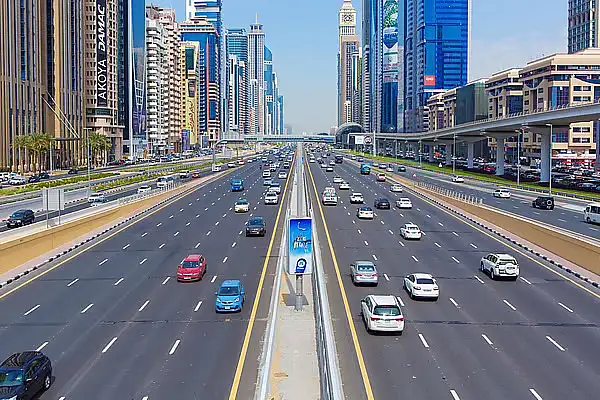
Experts say UAE roads could resemble the quieter conditions seen during school holidays with smarter commuting, including greater use of school buses and flexible work hours
- PUBLISHED: Mon 13 Jul 2026, 6:00 AM UPDATED: Tue 14 Jul 2026, 4:44 PM


The smoother traffic seen across the UAE during school holidays could continue all year round, at least partly, after classrooms reopen, experts have said.
While the summer break naturally takes thousands of school-run journeys off the roads, transport and workforce specialists believe some of the improvement could be sustained by spreading demand.
Recommended For You





Staggered office timings, flexible start windows, limited work-from-home options, car pooling and greater use of school buses could all help reduce the concentration of vehicles during the busiest morning and evening periods.
Stay up to date with the latest news. Follow KT on WhatsApp Channels.
“Each summer, we observe a noticeable improvement in morning traffic flow,” said Steve Burnell, CEO of STS Group, the UAE’s largest private school bus operator. “While overall traffic volumes naturally reduce during the school holidays, it highlights an important lesson: congestion is often a timing issue rather than simply a volume issue.”
He said spreading travel demand through staggered office hours, flexible working and increased school bus use could allow the existing road network to operate more efficiently “without building a single new lane”.
The question has become increasingly relevant as residents experience shorter journeys during the school break, particularly on routes affected by school drop-offs, office commutes and inter-emirate travel.
Dubai government studies have previously found that a two-hour flexible start window, combined with four to five remote-working days each month, could reduce morning peak travel time by 30 per cent.
The studies also found that if 20 per cent of employees worked remotely, traffic volumes could fall by 9.8 per cent on Sheikh Zayed Road and 8.4 per cent on Al Khail Road.
Looking beyond schools
Thomas Edelmann, founder and managing director of RoadSafetyUAE, said school journeys clearly contributed to rush-hour congestion but should not be viewed as the only cause.
“Yes, school drop-offs and pick-ups contribute to rush-hour congestion, but they are surely not alone to be blamed,” he said.
Their impact is likely to be more visible in areas with a high concentration of schools, he added, although detailed comparative data was not immediately available.
Edelmann said flexible working measures could help sustain smoother journeys, but additional steps would also be needed.
“Overall smoother movement can be sustained through practical changes such as staggered office timings, flexible start hours and increased work-from-home options,” he said.
He also called for measures to increase the number of passengers travelling in each vehicle through legitimate car-pooling schemes and wider school bus use.
One school bus can remove as many as 50 private cars from the road, according to a study cited by Edelmann.
He said buses could also improve safety, sustainability and the experience of students and suggested that authorities consider supporting or subsidising school transport to encourage greater uptake.
‘School buses are part of the solution’
Burnell said private school transport should not be regarded as a contributor to the problem.
“School buses are part of the solution, not the problem,” he said. “Congestion around schools is driven as much by travel behaviour as it is by road capacity.”
The UAE already has a highly regulated school transport network capable of moving large numbers of children safely and efficiently, he said.
The challenge is persuading more parents who have a choice to use those services rather than driving children individually.
“Every additional child travelling by bus means one fewer private vehicle contributing to peak-hour congestion, while also reducing emissions and improving safety around our schools,” Burnell said.
Earlier this year, Dubai began testing another model designed to reduce the number of individual school journeys.
The school transport pooling trial, launched by the Roads and Transport Authority with Yango Group and Urban Express, uses shared SUVs to transport students attending nearby schools and travelling along similar neighbourhood corridors.
The pilot aims to reduce traffic, travel time, transport costs and carbon emissions. If successful, the model could potentially be extended to more communities or adapted for other types of shared journeys.
2-hour window realistic for many jobs
Workplace changes would be another important part of any attempt to redistribute rush-hour traffic.
Mahesh Shahdadpuri, group chairman of TASC Outsourcing, said workplace flexibility had evolved from an employee benefit into a business strategy.
Companies have invested heavily in digital collaboration tools and performance systems in recent years, making it easier for some organisations to move away from rigid schedules.
“For many office-based roles, a two-hour start window is a realistic option that can improve employee wellbeing while helping ease congestion during peak commuting hours,” he said.
Rather than returning entirely to fixed office schedules after the pandemic, many employers are adopting what Shahdadpuri described as “structured flexibility”.
Under this approach, employees are given greater autonomy while businesses retain clear requirements around collaboration, accountability and team cohesion.
For flexible working to be adopted more widely, companies would need clear policies, measurable performance expectations, supportive leadership and technology that enables teams to collaborate effectively, he said.
“Flexibility must be designed around each organisation’s operational needs, with successful implementation depending on trust, clear communication, and a strong focus on outcomes and accountability.”
Not every sector can work remotely
Professional services, technology, finance, consulting and corporate functions are among the sectors best placed to introduce flexible hours or remote work.
Healthcare, manufacturing, hospitality, retail, logistics and other customer-facing industries are more dependent on employees being physically present.
However, even in those sectors, companies may be able to stagger shifts or provide greater scheduling flexibility without affecting services.
The main concerns for employers typically include productivity, supervision, collaboration, workplace culture and the ability to meet customer expectations.
Shahdadpuri said such difficulties often arose from unclear processes or outdated management practices rather than flexibility itself.
“Organisations that define clear objectives, invest in leadership capability, and equip teams with the right collaboration tools are finding that flexibility can coexist with high performance,” he said.


As Associate Editor, Sahim Salim helps tell the UAE story like no one else does — and leads a team of reporters that asks the questions to get news and headlines that matter.
