Wassim Seifeddine
05 June 2026•Update: 05 June 2026
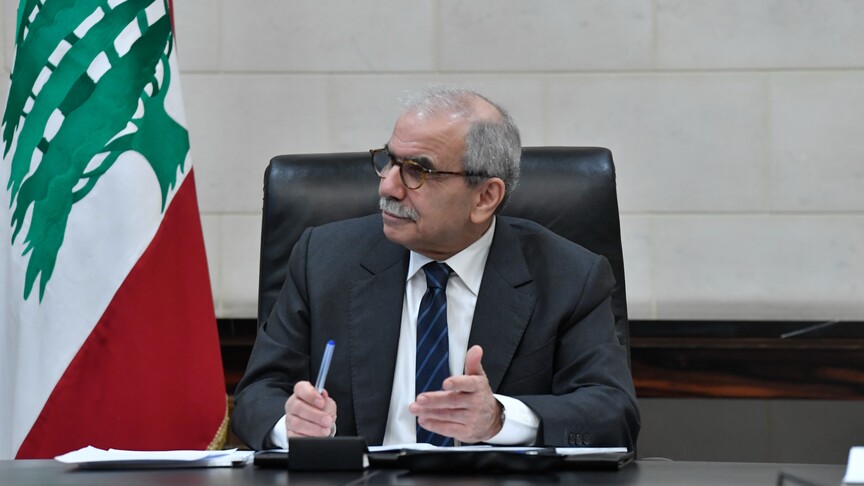
Lebanese Prime Minister Nawaf Salam on Friday called on Iran to stop treating south Lebanon and its residents as “leverage” in negotiations with the US, saying civilians are paying the price for a war that is “not their war.”
Salam made the remarks during a news conference at the Grand Serail in Beirut attended by ambassadors and representatives of international and UN organizations to launch a second emergency humanitarian appeal for those affected by Israel’s war on Lebanon.
His comments came a day after the US, Lebanon, and Israel issued a joint statement announcing a declaration of intent to implement a ceasefire, pending final approval by the parties, following a fourth round of negotiations in Washington.
On Thursday, the Islamic Revolutionary Guard Corps said Iran’s acceptance of a ceasefire was “conditional on a ceasefire on all fronts, including Lebanon.”
Responding to that position, Salam said Lebanon had succeeded, “through the efforts of the Lebanese state, the support of Arab brothers and American understanding,” in reaching a ceasefire arrangement.
“The Islamic Revolutionary Guard Corps was the first party to reject it, before anyone else,” he said.
The position “once again confirms that this is not our war, that it is not being fought for us, but on our land and at the expense of our people,” Salam added.
Addressing Iran directly, he said: “Have mercy on our south and stop treating it and its people as merely leverage to improve the terms of your negotiations” with the US.
He stressed that the Lebanese people “have a homeland that refuses to become a mailbox for the messages of others or an open arena for their wars.”
“Lebanon is not a card on anyone’s negotiating table, and the south is not anyone’s reserve front,” Salam said.
“The people of the south are once again paying the price for a decision they did not make and for a war that is not theirs,” he added.
A fragile ceasefire in Lebanon has been in place since April 17, which Washington extended until early July amid continued diplomatic efforts to preserve it and prevent its collapse.
Israel occupies areas in southern Lebanon, some held for decades and others seized during the 2023–2024 conflict. During the current offensive, Israeli forces advanced more than 10 kilometers (6.2 miles) into Lebanese territory, marking their deepest incursion since 2000.
More than 3,500 people have been killed and over 10,000 injured in Israeli attacks across Lebanon since March 2, according to Lebanese officials.
*Writing by Mohammad Sio in Istanbul